












Section 1: Introduction
1.1 Overview and Governing Body
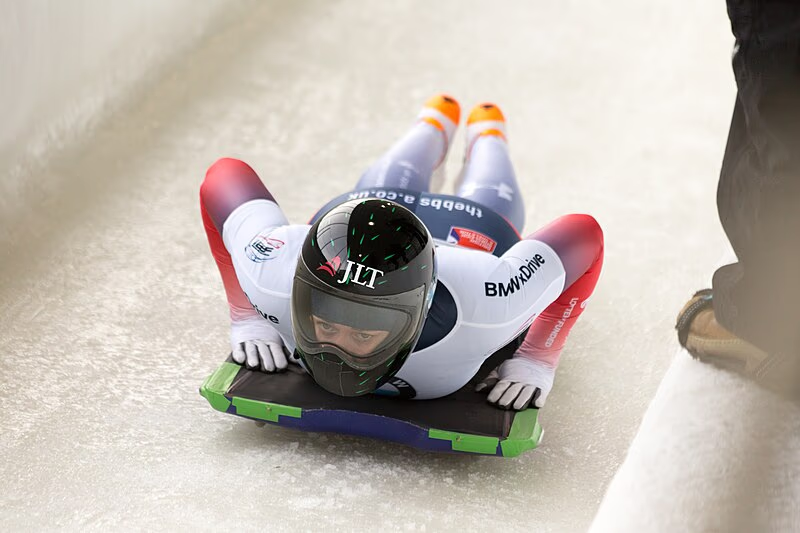
Skeleton is a head-first, prone-position sliding sport in which athletes race individually down an ice track on a small sled, reaching speeds exceeding 140 km/h (87 mph) and experiencing G-forces up to 5G in curves. Governed by the International Bobsleigh and Skeleton Federation (IBSF) under the IBSF International Rules for Skeleton, the sport returned to the Olympic program at the 2002 Salt Lake City Games after a 54-year absence (previously contested only at St. Moritz in 1928 and 1948). Both men’s and women’s individual events are contested at the Olympics.
1.2 History and Olympic Status
Skeleton originated in St. Moritz, Switzerland, in the late 19th century on the famous Cresta Run, a natural ice track built in 1884. The name “skeleton” likely derives from the stripped-down, bony appearance of the early metal sleds. After appearing at the 1928 and 1948 Olympics (both held in St. Moritz, the only venue with a suitable track at the time), the sport was absent from the Games until its permanent return in 2002. The addition of women’s skeleton in 2002 marked one of the first times a women’s sliding event was included in the Olympics.
1.3 Distinction from Luge and Bobsled
- Skeleton: Athlete lies face-down (prone), head-first on a flat sled. Sprint start with a running push. Steers with body weight, shoulders, and toe spikes.
- Luge: Athlete lies face-up (supine), feet-first on a sled. Seated start from handles. Steers with legs and shoulders against runners.
- Bobsled: Multi-person crew sits upright in an enclosed sled. Driver steers with rope pulleys connected to the front runners. Running push start.
- All three sports share the same artificially refrigerated tracks but use different start positions, sled designs, and technique.
Section 2: Equipment
2.1 The Sled
- Maximum sled weight: 43 kg (94.8 lb) for men, 35 kg (77.2 lb) for women
- Maximum combined weight (sled + athlete): 120 kg (264.6 lb) for men, 92 kg (202.8 lb) for women. If an athlete is under the maximum combined weight, ballast may be added to the sled up to the sled weight limit.
- Sled dimensions: Maximum length 120 cm (47.2 in). Maximum width 38 cm (15 in). Minimum height of the frame above the runners: 8 cm (3.1 in).
- Runners: Two steel runners with a gauge (distance between runner centers) of 34 mm. Runner length approximately 50 cm. Runner profile must match IBSF templates. Runners are removable for transport and temperature compliance.
- Frame: Steel or composite frame. Handle bumpers (padded protrusions on the front) for the athlete to grip during the start push. No mechanical steering mechanisms — no moving parts.
- Sled identification: Each sled is registered with the IBSF and marked with a unique identification number. Sleds are weighed and inspected before each race.
2.2 Helmet
- Chin-guard helmet mandatory, meeting IBSF specifications and EN 966 or equivalent certification
- Must provide face and chin protection due to the head-first orientation; the athlete’s chin is approximately 5–10 cm above the ice surface
- Visor or goggles may be used to protect against ice spray and wind
- No aerodynamic modifications, fins, or fairings on the helmet permitted
- Helmet must be securely fastened with a chin strap at all times during a run
2.3 Suit and Shoes
- Speed suit: Skin-tight racing suit made of approved materials. Maximum material thickness regulated by IBSF. No aerodynamic aids, ribbing, or surface texturing beyond normal fabric weave.
- Spike shoes: Purpose-built shoes with metal spikes on the sole for traction during the running start. Maximum spike length 7 mm (0.28 in). Spikes also used for minor steering adjustments during the run (toe pressure on the ice).
- Gloves: Required for grip on the sled handles during the start push. Padded palms; no spikes or gripping aids on gloves.
2.4 Runner Temperature Regulations
- Runner temperature checked before each run using calibrated infrared thermometers
- Runners must be within a specified temperature range relative to a control runner stored at track temperature (typically within 4 °C of the reference)
- Heating runners (to reduce friction on ice) is prohibited; runners that exceed the temperature threshold result in DSQ for that run
- Athletes typically store their runners in the same temperature-controlled environment as the control runner before racing
Section 3: Playing Area
3.1 Track Specifications
- Track length: 1200–1650 m (3937–5413 ft) from the skeleton/bobsled start to the finish
- Vertical drop: 100–150 m (328–492 ft) from start to finish
- Number of curves: 15–20 curves, including S-curves, hairpins, and high-banked turns
- Average gradient: 8–15% overall; sections may reach 20% on steeper passages
- Tracks are shared with bobsled and luge competitions (skeleton and bobsled use the same start; luge starts lower)
3.2 Track Construction
- Artificially refrigerated: ammonia or Freon-based refrigeration coils embedded in the concrete track structure maintain ice at -5 °C to -8 °C (23–18 °F)
- Ice surface: 2.5–5 cm (1–2 in) thick, built up by hand-spraying water layers and shaped by track crews
- Track walls: raised concrete walls lined with ice; roofed sections on some modern tracks to protect from sun and precipitation
- Only 16 artificially refrigerated sliding tracks exist worldwide (as of 2026), making track access a limiting factor for the sport’s growth
3.3 Start Area
- Running start zone: Approximately 30–40 m (98–131 ft) of level or slightly downhill ice surface
- Start block/handles at the beginning of the start zone for athletes to position their sled
- Start timing: Electronic timing beam at 15 m marks the push start time; second beam at approximately 50 m records the “start time” (critical performance metric)
- Start area is grooved or textured for spike shoe traction
3.4 Finish Area
- Electronic timing beam at the finish line records time to 1/100th of a second
- Deceleration zone (braking stretch) after the finish: minimum 100 m of uphill track for the sled to slow naturally
- Foam padding on the terminal wall at the end of the braking stretch
- Sled recovery area where athletes exit the track and equipment is collected for post-race inspection
Section 4: Players & Officials
4.1 Athlete Qualifications
- Individual competition only (no team events in skeleton)
- Athletes must hold a valid IBSF license and be registered by their national federation
- Minimum age: 18 for World Cup and Olympic competition
- Athletes must complete a minimum number of training runs on the competition track before racing (typically 3–6 official training runs over 2–3 days)
- Olympic quotas: maximum 3 athletes per nation per gender, based on IBSF world rankings
4.2 Officials and Jury
- Jury: IBSF Technical Delegate, Race Director, Jury President — oversee all aspects of competition
- Start officials: Verify start procedure, confirm athlete and sled positioning, control start signal
- Track officials: Positioned at key curves to monitor athlete passage and report incidents via radio
- Equipment controllers: Weigh sleds and athletes before and after each run; check runner temperatures; inspect sled compliance
- Timekeepers: Electronic timing to 1/100th of a second. Split times recorded at 3–5 intermediate points along the track.
- Video officials: Review footage from track cameras for rule violations, interference, or safety incidents
4.3 Start Order
- Runs 1 and 3: Start order based on IBSF world ranking (highest-ranked athletes start first for better ice conditions)
- Runs 2 and 4: Reverse order of standings after the previous run (leader slides last)
- In World Cup events, the top 20 after runs 1–2 advance to runs 3–4
- Athletes have a 60-second window to start once the track is declared clear
Section 5: Rules of Play
5.1 Competition Format
- Olympic and World Championship: 4 runs over 2 days (2 runs per day). Combined cumulative time of all 4 runs determines the final ranking.
- World Cup: 2 runs in a single day (combined time). Top 20 after run 1 advance to run 2.
- Training: 3–6 official training runs over the days preceding competition; athletes must complete a minimum number to be eligible to race
5.2 The Start
- Athlete positions the sled at the start block, gripping the front handles (bumpers)
- On the start signal (green light or audible tone), the athlete sprints while pushing the sled for 30–40 m
- After building maximum speed, the athlete dives head-first, face-down (prone) onto the sled
- The start is the only phase where the athlete can generate speed — after loading, momentum comes entirely from gravity
- Start time (measured over approximately 50 m) is a critical performance differentiator; top athletes complete the push phase in under 5 seconds
- A false start (leaving before the signal) requires the athlete to return and restart
5.3 Sliding and Steering
- Athletes steer by shifting body weight: pressing the right shoulder into the sled to turn left, and vice versa
- Knee pressure against the sled frame provides additional directional control
- Toe spikes dragged lightly on the ice surface create friction on one side for fine steering adjustments
- Head position affects aerodynamics; athletes keep their chin tucked and body streamlined
- Arms are held tight alongside the body or sled after loading; arms dragging on ice results in friction and time loss
- No mechanical steering devices, brakes, or moving parts on the sled are permitted
5.4 Finishing
- Athlete must cross the finish line on the sled to receive a valid time
- If the athlete separates from the sled before the finish (crash, ejection): DNF (Did Not Finish)
- If the athlete crashes but remains on the sled and crosses the finish line: time is valid
- After crossing the finish, the athlete rides into the deceleration zone and uses toe spikes and body drag to slow the sled
5.5 Equipment Inspection Between Runs
- Sleds are weighed after each run; combined weight (sled + athlete) verified against the maximum
- Runner temperature measured immediately at the finish area after each run
- Sled dimensions and runner profiles may be checked against IBSF templates at any point during competition
- Any modification to the sled between inspection and the start is prohibited
Section 6: Scoring
6.1 Timing and Results
- All times recorded to 1/100th of a second (two decimal places)
- Final ranking determined by the cumulative time of all runs (4 runs for Olympics/World Championships, 2 runs for World Cup)
- Lowest cumulative time wins
- Typical run times: 50–65 seconds depending on track length and conditions
- Winning margins at Olympic level are frequently less than 0.50 seconds over 4 runs
6.2 Split Times
- Intermediate (split) times recorded at 3–5 points along the track
- Start time (0–50 m) is a key split, as the push phase is the only athlete-powered portion of the run
- Split times help coaches and athletes analyze performance through specific track sections
- Split time data is broadcast to spectators and television for real-time comparison
6.3 Tiebreaking
- If two or more athletes have identical cumulative times after all runs, they share the same rank (ties are not broken)
- At the Olympics, tied athletes receive the same medal (a dead heat for gold means two gold medals are awarded)
- IBSF World Cup: tied athletes receive the same World Cup points
6.4 World Cup and Ranking Points
- IBSF World Cup points awarded for top 20 finishers per race: 225-210-200-185-175-170-165-160-155-150 (1st–10th), then decreasing to 26 for 20th
- World ranking determines Olympic quotas and World Cup start order
- Rankings updated after each competition based on cumulative season points
Section 7: Violations & Penalties
7.1 Equipment Violations
- Runner temperature exceeds limit: DSQ for that run. Runners found to be artificially heated (warm above the reference temperature) result in immediate disqualification.
- Sled or combined weight exceeds maximum: DSQ for that run. If discovered post-race, the run’s time is invalidated.
- Sled dimensions non-compliant: Athlete may not start until the sled is corrected; if discovered after a run, DSQ for that run.
- Equipment modification after inspection: DSQ from the competition (all runs invalidated). Severe cases may result in IBSF suspension.
- Unauthorized substances on runners: Application of any substance to runners (chemicals, lubricants) other than standard polishing is prohibited — DSQ and potential multi-race suspension.
7.2 Procedural Violations
- Athlete not on sled at finish: DNF (Did Not Finish) for that run; time not recorded
- False start: Athlete must return to start position; repeated false starts may result in DSQ at the jury’s discretion
- Failure to start within the time window: After the track is declared clear, athlete has approximately 60 seconds to begin; exceeding this results in DNS (Did Not Start)
- Missing mandatory equipment check: Athlete may not start the run until inspection is completed
7.3 Conduct Violations
- Unsportsmanlike behavior (verbal abuse of officials, damaging track infrastructure): warning, fine, or suspension
- Interference with another athlete’s equipment or sled: DSQ and potential IBSF disciplinary proceedings
- Doping violations handled per WADA code: provisional suspension, results invalidation, and IBSF disciplinary action
Section 8: Safety Considerations
8.1 Personal Protective Equipment
- Chin-guard helmet: Mandatory for all runs (training and competition). Must provide face and chin protection since the athlete’s head is the leading body part, centimeters from the ice surface.
- Speed suit: Provides some abrasion protection in case of a crash or sled ejection
- Spike shoes: Must be worn; provide traction during the start push and braking control during the finish deceleration
- No additional body armor or padding is standard in skeleton (unlike bobsled pilots who may wear additional protection)
8.2 Track Safety Features
- Track walls padded with foam at high-impact zones (tight curves, S-bends, and areas where ejections are most likely)
- Netting or catch fences installed above walls at curves where athletes have historically left the track
- Ice surface inspected and maintained by track crews between every 5–10 athletes; cracks, debris, and uneven surfaces repaired
- Speed monitoring at multiple points along the track; if speeds exceed design parameters, the start gate may be lowered (moving the start further down the in-run)
8.3 Medical and Emergency Protocols
- Medical team stationed at the finish area with ambulance and emergency equipment
- Track marshals at every curve with radio communication to race control and medical team
- Crash protocol: if an athlete crashes, competition is immediately halted until the athlete is cleared or evacuated, the sled is recovered, and the track is inspected and repaired
- Concussion protocol: any athlete involved in a crash is assessed for concussion before being allowed to take subsequent runs
- Nearest hospital and helicopter evacuation route identified in the competition safety plan
8.4 Training and Progression Requirements
- New athletes must complete a progression program starting from lower start positions before being permitted to use the full-length start
- Minimum training runs on the specific competition track are required before racing (typically 3–6 runs); this requirement accounts for each track’s unique curve profiles and speeds
- Track orientation sessions conducted by experienced pilots or IBSF officials for athletes new to a particular track
- Maximum speed limits may be enforced during training sessions for novice athletes