


🏛️Official — IBSF
Loading OpenSourceSports…
Winter Sports
1 players
both
sled, helmet, race suit
10 essential rules
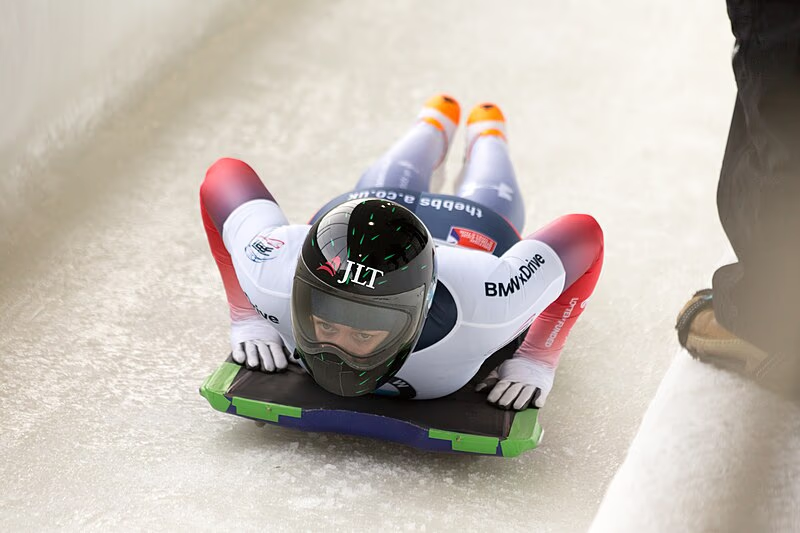
Skeleton is a head-first, prone-position sliding sport in which athletes race individually down an ice track on a small sled, reaching speeds exceeding 140 km/h (87 mph) and experiencing G-forces up to 5G in curves. Governed by the International Bobsleigh and Skeleton Federation (IBSF) under the ...
Maximum sled weight: 43 kg (94.8 lb) for men, 35 kg (77.2 lb) for women; Maximum combined weight (sled + athlete): 120 kg (264.6 lb) for men, 92 kg (202.8 lb) for women. If an athlete is under the maximum combined weight, ballast may be added to the sled up to the sled weight limit.; Sled dimensi...
Chin-guard helmet mandatory, meeting IBSF specifications and EN 966 or equivalent certification; Must provide face and chin protection due to the head-first orientation; the athlete’s chin is approximately 5–10 cm above the ice surface; Visor or goggles may be used to protect against ice spray an...
Speed suit: Skin-tight racing suit made of approved materials. Maximum material thickness regulated by IBSF. No aerodynamic aids, ribbing, or surface texturing beyond normal fabric weave.; Spike shoes: Purpose-built shoes with metal spikes on the sole for traction during the running start. Maximu...
Runner temperature checked before each run using calibrated infrared thermometers; Runners must be within a specified temperature range relative to a control runner stored at track temperature (typically within 4 °C of the reference); Heating runners (to reduce friction on ice) is prohibited; run...
Track length: 1200–1650 m (3937–5413 ft) from the skeleton/bobsled start to the finish; Vertical drop: 100–150 m (328–492 ft) from start to finish; Number of curves: 15–20 curves, including S-curves, hairpins, and high-banked turns
Artificially refrigerated: ammonia or Freon-based refrigeration coils embedded in the concrete track structure maintain ice at -5 °C to -8 °C (23–18 °F); Ice surface: 2.5–5 cm (1–2 in) thick, built up by hand-spraying water layers and shaped by track crews; Track walls: raised concrete walls line...
Running start zone: Approximately 30–40 m (98–131 ft) of level or slightly downhill ice surface; Start block/handles at the beginning of the start zone for athletes to position their sled; Start timing: Electronic timing beam at 15 m marks the push start time; second beam at approximately 50 m re...
Electronic timing beam at the finish line records time to 1/100th of a second; Deceleration zone (braking stretch) after the finish: minimum 100 m of uphill track for the sled to slow naturally; Foam padding on the terminal wall at the end of the braking stretch
Individual competition only (no team events in skeleton); Athletes must hold a valid IBSF license and be registered by their national federation; Minimum age: 18 for World Cup and Olympic competition
Jury: IBSF Technical Delegate, Race Director, Jury President — oversee all aspects of competition; Start officials: Verify start procedure, confirm athlete and sled positioning, control start signal; Track officials: Positioned at key curves to monitor athlete passage and report incidents via radio
Never reveal your runner preparation methods
The preparation of steel runners (the blades contacting the ice) is the sport's most guarded competitive secret. Temperature treatment, polishing techniques, and coatings are never shared with rivals. Athletes have been known to go to elaborate lengths to conceal preparation from competitors at the track.
IBSF regulations govern runner temperature limits; the unwritten rule is about the preparation methods themselves, which exist in a gray zone between written rules.
The sliding family: mutual aid across national lines
Skeleton's small, danger-bonded community carries a strong norm that competitors help each other in genuine need — equipment failures before a run, crashes, or emergencies. Fierce rivalry is set aside. Athletes from opposing nations routinely assist each other with logistics at unfamiliar tracks.
More pronounced in skeleton than in many sports due to the shared physical risk and the small size of the global competitive field.
Ready to dive deeper?