










Section 1: Introduction
NCAA Alpine Skiing is the collegiate variant of alpine skiing contested by NCAA Division I, II, and III institutions in the winter semester. NCAA Skiing combines Alpine Skiing (slalom + giant slalom only — speed events not contested at NCAA level due to course/safety constraints) and Nordic Skiing (cross-country) at the championship; this entry covers the Alpine half. The NCAA Skiing Championship is contested in early March at a rotating venue. NCAA Alpine Skiing uses the FIS (International Ski Federation) technical baseline with NCAA-specific modifications around event selection, qualifying, and team scoring. The current edition is the 2025-26 NCAA Skiing Rules Book. For the international FIS framework see the sibling FIS Alpine Skiing Rules entry.
Section 2: Equipment
- Skis: FIS-approved per discipline; slalom skis 165 cm minimum (men) / 155 cm (women); GS skis 195 cm minimum (men) / 188 cm (women)
- Bindings: FIS-approved with appropriate DIN setting
- Boots: FIS-approved per discipline
- Poles: per discipline (slalom poles short with arc; GS poles longer)
- Helmet: FIS-approved (mandatory at NCAA — 1600N standard)
- Race suit: FIS-approved (no slick coatings)
- Gloves, goggles, protective gear (back protector encouraged for GS)
Section 3: Playing Area
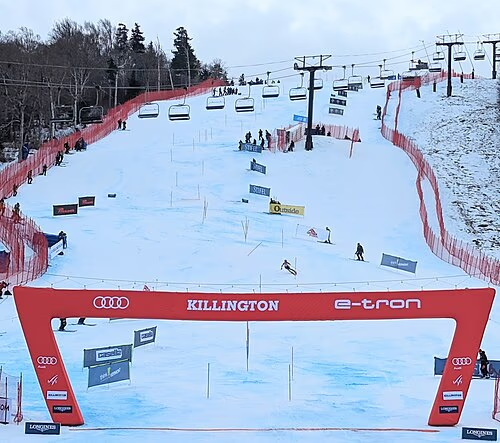
- Slalom course: short turns through closely-spaced gates; vertical drop typically 140-220 m for women / 180-220 m for men; gate count high (55-75 gates)
- Giant slalom course: longer turns through wider-spaced gates; vertical drop 250-450 m; gate count lower (35-55 gates)
- FIS-approved homologated venue required for NCAA championship
- Snow conditions inspected pre-race; race may be delayed/cancelled for unsafe conditions (ice, fog, wind)
Section 4: Players & Officials
- NCAA team: 6 skiers per team in each gender (men's + women's events scored separately, combined for team championship)
- Top 3 individual scores per gender count toward team total per event
- Officials: technical delegate (TD), course setters, gate judges, starter, finish judges, FIS-certified timer
- NCAA Championship: ~30 men + ~30 women athletes per discipline qualify from regional + USCSA carnivals
Section 5: Rules of Play
- Each event: 2 runs on 2 different course sets
- Time = sum of run 1 + run 2; lowest combined time wins
- Course inspection: 30-60 min before each run; no run-throughs allowed
- Gate passage: skier must pass through each gate in correct order; missed gate = DSQ
- Falls: skier may continue if able; DNF if unable to complete
- Equipment failure: DNF (no re-runs except for course-related issues)
Section 6: Scoring
- Individual event: lowest combined 2-run time wins
- NCAA team scoring: places 1-30 score points per published table (1st = 60 pts, 2nd = 50 pts, etc., scaling down)
- Team total: top 3 scores per gender per event combined
- NCAA Championship team title: aggregate of Alpine + Nordic team scores
Section 7: Violations & Penalties
- Missed gate: DSQ from the run
- Course interference (e.g., not following marked course): DSQ
- Equipment violation (illegal ski length, illegal binding setting): DSQ
- Outside aid (re-mounting after fall with assistance): DSQ
- Unsporting conduct: NCAA Sportsmanship Code; ejection + disciplinary review
Section 8: Safety Considerations
Mandatory FIS-approved helmets reduce head-injury risk. Course safety: B-net safety fencing on dangerous sections; padded gates; safety crews at risk points. Race may be cancelled/delayed for unsafe weather (high wind, fog, ice). Concussion protocol: removal + graduated return-to-play assessment for any actual or suspected concussion (skier-fall impacts and gate strikes are primary risks). Spinal-injury emergency action plan required (high-speed crashes have spinal-injury risk). Required: certified athletic trainer + EMT/ambulance + AED + ski patrol at all NCAA-sanctioned races. Avalanche assessment required for back-country/high-altitude venues.