













Section 1: Introduction
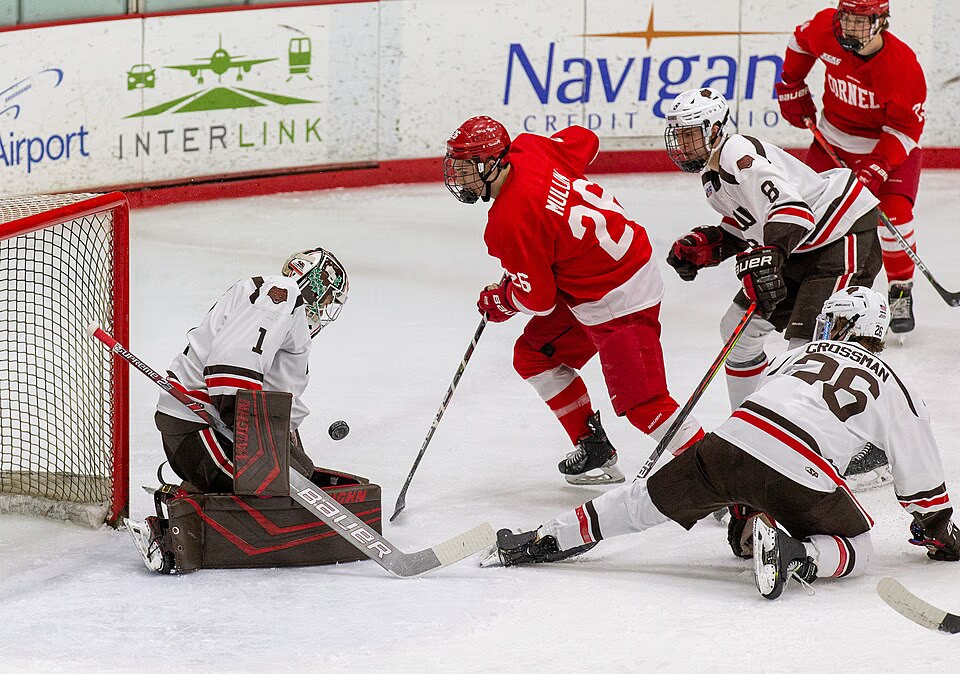
NCAA Ice Hockey is the collegiate variant of ice hockey contested by NCAA Division I, II, and III institutions across both men's and women's brackets in the winter season. NCAA Ice Hockey uses the IIHF rule baseline with NCAA-specific modifications around overtime format, video review, goaltender equipment, and team penalty handling. The current edition is the 2025-26 NCAA Ice Hockey Rules Book. For international rules see the sibling IIHF Ice Hockey Rules entry; NHL professional rules are under Team Sports/Hockey/NHL Official Rulebook.
Section 2: Equipment
- Puck: vulcanized rubber, 3" diameter × 1" thick, 5.5-6 oz, frozen pre-game
- Stick: max 63" length, blade max 12.5" × 3" (skater); goalie stick 26" max paddle, 15.5" blade
- Skates: NCAA-approved figure with secure ankle support and toe cap; goaltenders use specialized goalie skates
- Required protective: NOCSAE-approved helmet with chinstrap fastened, full face mask (mandatory at NCAA — distinguishes NCAA from some pro leagues), neck guard recommended/required by some conferences, mouthguard, shoulder pads, elbow pads, gloves, hockey pants, shin guards, jock
- Goaltender: full goalie helmet/mask, throat protector, chest+arm protector, blocker, glove, leg pads (max 11" wide per side), goalie pants, NCAA-approved goal stick
- Goal frame: 6 ft wide × 4 ft high × 44" deep with white netting
Section 3: Playing Area
- NCAA rink: 200 ft × 85 ft (standard "North American" dimensions; some venues use larger international 200 × 100)
- Two blue lines defining the offensive/defensive zones; one red center line
- Two end-zone faceoff dots in each defensive zone, neutral-zone faceoff dots, center faceoff dot
- Goal crease: D-shape with 6-ft radius from center of goal line
- Trapezoid behind each goal where the goaltender may play the puck (NHL-style, adopted by NCAA)
- Boards 40-48" high topped with safety glass (84" minimum height behind the goals)
Section 4: Players & Officials
- 5 skaters + 1 goaltender per team on the ice during regulation play
- Roster: typically 25-28 players for NCAA D1; suit list 20-22 per game
- Unlimited line-change substitutions on the fly through the bench area or at stoppages
- Officials: 2 referees + 2 linespersons (4-official system) for NCAA D1 men's; 1 referee + 2 linespersons (3-official) for some D2/D3 / women's games
- Off-ice officials: scorer, timekeeper, penalty timekeeper, video review official
- NCAA Coach's Challenge: head coach may challenge designated reviewable plays (offside leading to a goal, goaltender interference, missed stoppage); successful challenge does not cost the team timeout, unsuccessful one charges a timeout
Section 5: Rules of Play
Game Structure
- Three 20-minute periods, separated by two 15-minute intermissions
- Tied game in regular season: 5-minute 3-on-3 sudden-death overtime, then 5-round shootout if still tied (per NCAA / conference adoption)
- NCAA Tournament: 20-minute 5-on-5 sudden-death overtime periods until a goal is scored; no shootout in postseason
Faceoffs
Game starts and resumes after stoppages with a faceoff at the appropriate dot. Centers position sticks flat on the ice; the linesperson drops the puck.
Movement
- Forward passing: legal in all three zones (no two-line-pass restriction since 2005)
- Offside: an attacking player may not enter the offensive zone before the puck
- Icing: a non-power-play team that shoots the puck from its own side of the center red line across the opponent's goal line is whistled for icing (touch-up icing in NCAA — opposing player must touch the puck to confirm, with hybrid icing safety modifications)
- Goaltender may handle the puck in the crease and within the trapezoid; outside the trapezoid behind the goal line is a delay-of-game penalty
Section 6: Scoring
- Goal: entire puck crosses the goal line between the posts and below the crossbar
- Goals are reviewable by NCAA video review for legality (offside, puck in net, kicking motion, hand-pass, distinct kicking motion)
- Empty-net, shorthanded, power-play, and game-winning goals are recorded for stat purposes
- Match result: most goals at end of regulation/overtime/shootout wins
Section 7: Violations & Penalties
- Minor penalty: 2 minutes in the penalty box; team plays short until the penalty expires or the opposing team scores (power play ends on goal for minor)
- Major penalty: 5 minutes; team plays short for the full 5 minutes regardless of goals scored against
- Misconduct: 10 minutes (player only — team plays full strength)
- Game misconduct: ejection from the game + supplementary discipline review
- Match penalty: ejection + 5-minute power play to the opposing team + suspension review
- Common minor offenses: tripping, hooking, slashing, holding, interference, roughing, cross-checking, boarding, charging, elbowing, high-sticking
- Major-only or potential major offenses: checking from behind, head contact, charging causing injury, fighting (game misconduct + automatic suspension at NCAA)
- NCAA contact-to-the-head framework: any contact to the head is a major + game misconduct, regardless of intent (stricter than some pro leagues)
- Fighting: NCAA assesses a game misconduct + minimum one-game suspension for the first offense
Section 8: Safety Considerations
Mandatory full face mask (NCAA standard); contact-to-the-head zero-tolerance framework; fighting penalty includes mandatory game misconduct + suspension. Concussion protocol: removal + graduated return-to-play assessment. Independent medical observers may be present at championship-level games. NCAA-mandated safety equipment, ice/glass inspection pre-game. Medical coverage: certified athletic trainer required at every NCAA-sanctioned game; team physician + EMT/ambulance at championship-level. Emergency action plan + AED access at every venue.