













Section 1: Introduction
Professional Sumo (大相撲, ōzumō) is Japan's national sport, governed by the Nihon Sumo Kyokai (Japan Sumo Association, founded 1925) as the sole professional sumo authority worldwide. Sumo wrestlers (rikishi) compete in six annual 15-day tournaments (basho): January (Tokyo), March (Osaka), May (Tokyo), July (Nagoya), September (Tokyo), November (Fukuoka). Rikishi live in heya (training stables) under traditional discipline, and rank-up through a strict hierarchy from Jonokuchi (lowest division) to Makuuchi (top division), with the apex rank of Yokozuna (grand champion) historically held by only ~73 wrestlers in 350+ years of recorded sumo. Sumo's deeply ceremonial nature includes Shinto religious roots, salt-purification rituals, and a complex codified tradition of dress, ritual, and conduct. Amateur sumo is separately governed by the International Sumo Federation (IFS); this entry covers the professional Nihon Sumo Kyokai ruleset.
Section 2: Equipment
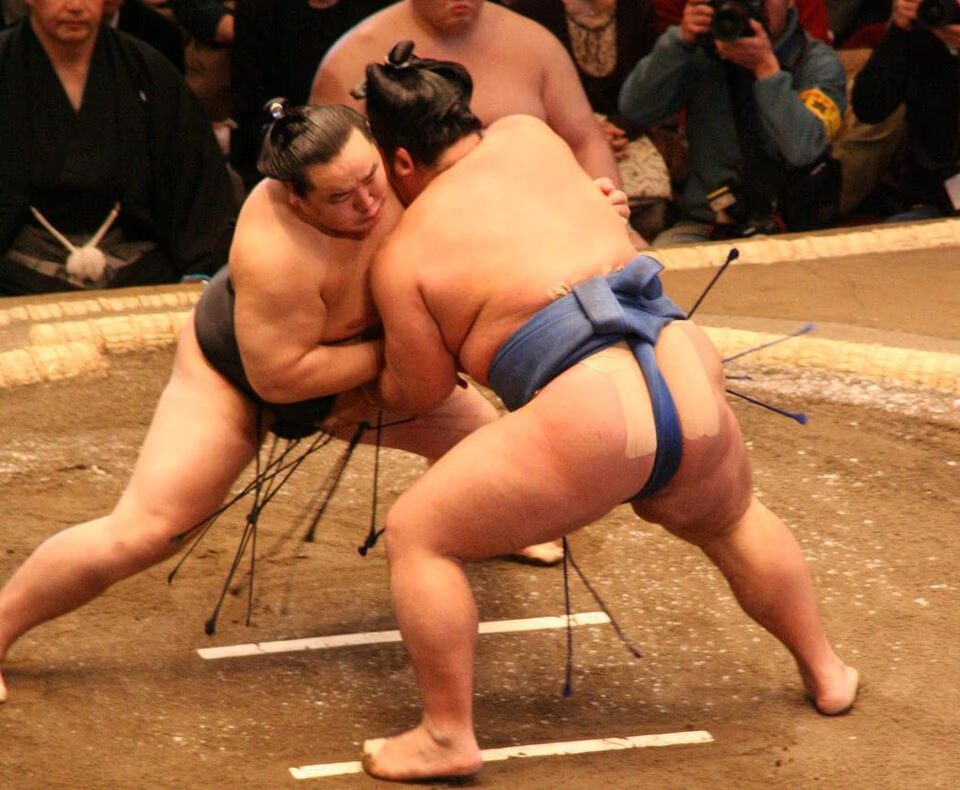
- Mawashi (silk belt loincloth): the rikishi's only attire during competition; ~9-13 m long, folded + wrapped around the waist + crotch; color varies by rank (Makuuchi: vibrant colored; lower divisions: black cotton)
- Chonmage (topknot hair-style): traditional samurai-style hair worn by all professional rikishi; ceremonial cutting (danpatsu-shiki) marks retirement
- No protective gear, no shoes — barefoot competition on the clay dohyo
- Salt + chikara-mizu (power water) used in pre-match purification ritual
Section 3: Playing Area
- Dohyo (土俵): elevated clay-and-sand ring, raised ~50 cm above the floor
- Inner ring diameter: 4.55 m bounded by a circular rope (tawara) embedded in the clay
- Outer dohyo platform extends an additional ~2 m beyond the rope
- Two starting lines (shikiri-sen) drawn 70 cm apart at center
- Roof (yakata) suspended above the dohyo at major tournaments, modeled on Shinto shrine architecture
- Ring kept ritually clean — salt thrown by rikishi before each match for purification
Section 4: Players & Officials
- Two rikishi per match (1-on-1)
- No weight classes — all rikishi within a division compete open-weight
- Divisions (highest to lowest): Makuuchi, Juryo, Makushita, Sandanme, Jonidan, Jonokuchi, Maezumo
- Within Makuuchi: ranks include Yokozuna (grand champion), Ozeki, Sekiwake, Komusubi, Maegashira
- Officials: Gyoji (referee in ceremonial robes), 5 shimpan (ringside judges who can overrule the gyoji), yobidashi (announcer + ring keeper)
- All rikishi are men in professional sumo; women are not permitted to enter the dohyo per Nihon Sumo Kyokai tradition (a controversial historic rule)
Section 5: Rules of Play
Match Length
- No fixed time limit — matches typically last 5-30 seconds; most are over within 10 seconds
- Pre-match ritual (shikiri) takes 4+ minutes; salt-throwing + facing-off; the actual bout is brief
Win Conditions
- Force opponent out of the dohyo (any part of body steps outside the rope), OR
- Force opponent to touch the dohyo with any body part other than feet (knee, hand, even hair) — falling, being thrown, or losing balance
Kimarite (Winning Techniques)
- 82 officially recognized winning techniques (kimarite) — including yorikiri (force-out grip), oshidashi (push-out), uwatenage (overarm throw), shitatenage (underarm throw), various trips + lifts + slap-downs
- Each match victory recorded with the kimarite used — kimarite history is preserved as part of Sumo tradition
Banned Techniques (Kinjite)
- No closed-fist punches (open-hand slaps permitted)
- No kicking
- No grabbing hair
- No grabbing or hitting the genitals
- No grabbing or untying the mawashi (other than to grip + throw)
- No choking
- No eye-pokes or attacks to throat
Section 6: Scoring
- Each match: 1 win or 1 loss recorded per rikishi (no scoring beyond W/L)
- Each basho: 15 days × 1 match per rikishi = up to 15 wins
- Kachi-koshi: 8 or more wins in a 15-day basho = winning record (promotion + bonus)
- Make-koshi: 8 or more losses = losing record (potential demotion)
- Yusho (basho championship): wrestler with most wins; sometimes ends in playoffs (kettei-sen) if multiple wrestlers tie
- Yokozuna promotion: typically requires two consecutive yusho titles at Ozeki rank + Yokozuna Deliberation Council endorsement
Section 7: Violations & Penalties
- Banned technique (kinjite): immediate loss + potential commission discipline
- Mawashi failure (belt comes off during match): immediate loss (rare, considered dishonorable)
- Premature start (henka jump): tactical move (not technically illegal) but heavily frowned upon at Yokozuna rank
- Failure to bow / observe ritual: commission warning; may affect promotion considerations
- Conduct outside the dohyo: Nihon Sumo Kyokai has historically imposed lengthy suspensions for personal-conduct violations
- Anti-doping: Sumo Association maintains anti-doping policy aligned with Japanese Olympic Committee testing standards
Section 8: Safety Considerations
Professional sumo's injury profile: severe limb fractures (especially knees), neck injuries from being thrown, shoulder + back strain from grappling at high body weights (rikishi often 130-200+ kg). Nihon Sumo Kyokai provides on-site medical at every basho: ringside physician, paramedic team, ambulance + ER partnership with Tokyo hospitals. Concussion protocol: rikishi removed from basho if KO-suspected; medical clearance required for return. Specific protocol for falls off the elevated dohyo (~50 cm drop into the front row, occasional spectator + rikishi injury). Annual heya medical inspections + rikishi physical assessments. Long-term health monitoring (rikishi face elevated risk of cardiovascular disease + Type-2 diabetes from sumo diet + body composition).