







Section 1: Introduction
The Ju-Jitsu International Federation (JJIF) is the IOC-recognized international governing body for traditional Japanese Ju-Jitsu (distinct from Brazilian Jiu-Jitsu). JJIF administers three competitive disciplines: Fighting, Ne-Waza (groundwork), and Duo (paired forms). The Fighting discipline is JJIF's signature mixed-rules combat format, which divides each match into three phases: striking (Phase 1), throws + transitions (Phase 2), and groundwork (Phase 3) — a structure that showcases the complete Ju-Jitsu skill set. See sibling JJIF Ne-Waza Rules entry for the groundwork-only ruleset.
Section 2: Equipment
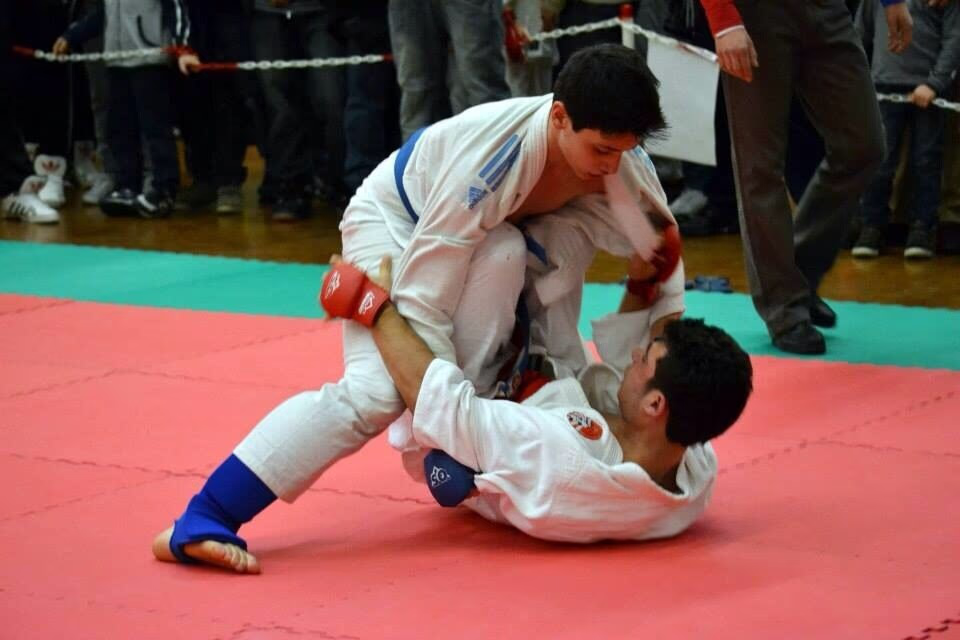
- Gi (Kimono): JJIF-approved white gi (Phase 2 + 3); red/blue belt for distinguishing competitors
- Hand pads / open-fingered gloves: for Phase 1 striking — lightly padded, similar to amateur boxing
- Headgear: mandatory in Junior categories; optional in Senior
- Mouthguard: mandatory
- Shin guards + instep pads: mandatory
- Groin protector: mandatory (men); chest protector for women optional
- Barefoot competition
Section 3: Playing Area
- JJIF-standard tatami: 8m × 8m competition area + padded safety zone
- Mat materials must meet JJIF specifications for both striking-impact + groundwork comfort
Section 4: Players & Officials
- Two competitors per match
- Weight classes follow JJIF schedule (Men: -56, -62, -69, -77, -85, -94, +94 kg; Women similar consolidation)
- Age categories: Cadet, Junior, Senior, Veteran
- Officials: 1 mat referee + 2 corner judges + scoring official + timekeeper
- JJIF-certified referee panel with continental rotation
Section 5: Rules of Play
Match Length
- Single 3-minute period (4 minutes for Senior major championship)
- Match is continuous; the three "phases" describe the techniques permitted at any given moment, not separate timed sub-rounds
Phase 1: Striking (Atemi-Waza)
- Light-contact punches + kicks to permitted target areas
- 1 point per clean strike
- No knockouts permitted — heavy contact is penalized
Phase 2: Throws + Transitions
- Throws scored 2-7 points depending on amplitude + landing
- Ippon (full throw to back): 7 points
- Wazari (partial back-landing): 5 points
- Yuko: 3 points
Phase 3: Groundwork (Newaza)
- Pin (15 seconds): 5 points
- Submission via tap = total victory (ippon)
- Joint locks on arms + chokes legal at Senior level; restricted in Junior
- No leg locks (heel hooks, kneebars prohibited)
Phase Transitions
- Continuous flow: referee directs transitions based on competitor actions
- Stalemate in any phase → referee restart in standing
Section 6: Scoring
- Decision priority: ippon/submission > points > referee decision
- Tournament: single-elimination + repechage
- Gold/Silver/two Bronze per weight + gender + age
Section 7: Violations & Penalties
- Heavy contact in Phase 1 (striking too hard): warning → point deduction → DQ
- Illegal techniques (eye-poke, throat, spine, head-butts, leg locks, etc.): caution → DQ
- Stalling / passivity: warning → caution → opponent advantage
- Unsportsmanlike conduct: DQ
- Anti-doping: WADA Code (JJIF signatory); in-competition + out-of-competition testing
Section 8: Safety Considerations
JJIF Fighting's light-contact striking rule (vs full-contact alternatives) substantially reduces concussion risk. Mandatory headgear for Junior categories adds protection. Phase 2 throws + Phase 3 groundwork carry standard combat-grappling injury risk (shoulder, knee, neck strain). JJIF requires on-site team physician + EMT + ambulance at international championship level. AED on-site. Concussion protocol: SCAT-5 assessment + multi-stage return-to-competition clearance. Skin-infection screening before mat use. Equipment inspection pre-match.