

🏛️Official — USA Ultimate
Loading OpenSourceSports…
Team Sports
3–15 players
outdoor
disc, jersey, footwear
10 essential rules
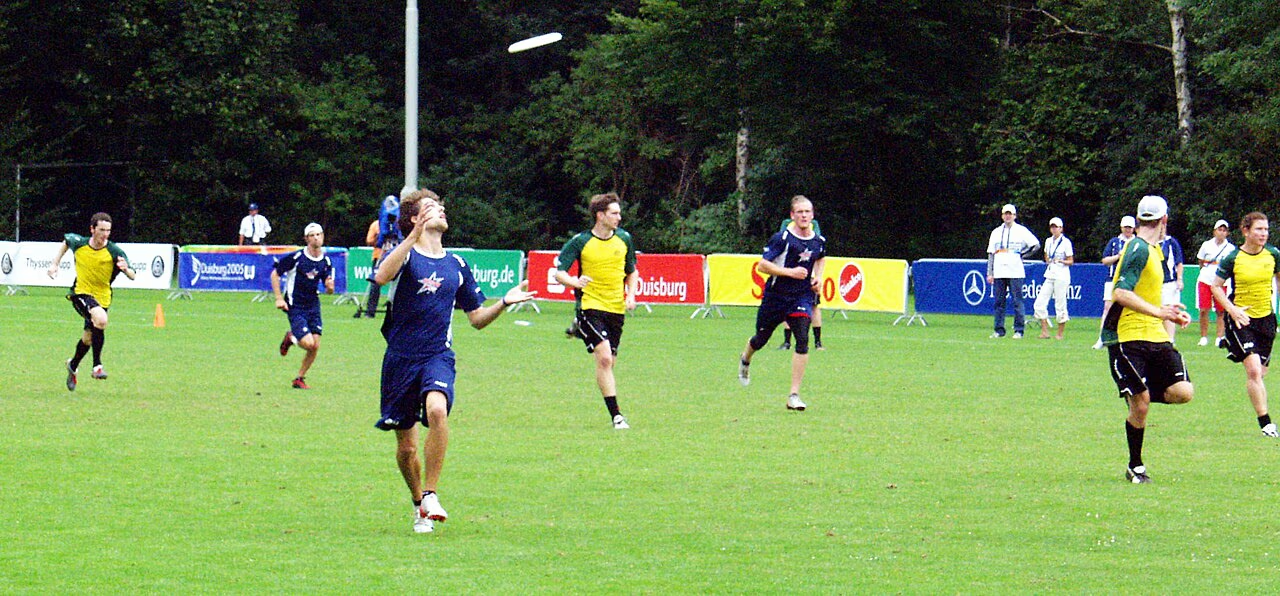
Ultimate (often colloquially "Ultimate Frisbee") is a non-contact, self-officiated team sport played with a flying disc. USA Ultimate (USAU) is the recognized national governing body in the United States; the World Flying Disc Federation (WFDF) governs internationally and is recognized by the Int...
Disc is advanced only by passing — no running with the disc; Receiver must establish a pivot foot upon catching (basketball-style); 10-second "stall count" by the defender (marker) — thrower must release disc before count reaches 10. The 2026-27 rules tightened marker conduct here: the count must...
Score when a receiver catches the disc in the opposing end zone with full possession + in-bounds
Disc: 175-gram flying disc; USAU-approved manufacturers (Discraft Ultra-Star is standard); Cleats: rubber/molded only (no metal); Jerseys: numbered, contrasting colors per team
Field: 70 yards (64 m) × 40 yards (37 m) playing field, plus two 20-yard (18 m) end zones; Total: 110 yards × 40 yards; Marked sidelines and end-zone lines
7 players per side on the field (standard outdoor format); Roster: typically 14-25 per team; unlimited substitutions between points; New for the 2026-27 rules: deliberately mis-designating a group of players at an event (e.g., misrepresenting who is rostered to a given team or division) is itself...
"Pull": defensive team throws disc to offensive team to start each point (like a kickoff); After scoring, scoring team pulls next; Disc is advanced only by passing — no running with the disc
1 point per score (in-bounds catch in opposing end zone); Game-to-15 standard for outdoor 7-on-7 (cap at 19, win by 2 if reached); Hard cap (time): typically 90 minutes total game-time; soft cap notifies of approaching end
Foul: any non-incidental contact between players; called by the affected player → "contest" or "no contest"; if contested, disc returns to thrower; Travel: moving the pivot foot after catching; disc returns to thrower; Pick: defender obstructed; defender call → play stops + resume at point of obs...
Ultimate is non-contact by design — incidental contact happens but intentional contact is penalized. Common injuries: ankle sprains (sudden cuts), hamstring strains (sprinting), shoulder/wrist (diving layouts).
All players responsible for fair play, knowledge of rules, mutual respect; Even at elite level, players make their own foul/contest calls; "Contest" → re-do throw; "no contest" → call stands
Only call fouls you genuinely believe occurred
The rulebook grants players the right to call fouls, but Ultimate's deepest cultural norm demands calls reflect honest belief — not strategic use of the system. Making a call you know is wrong, even to gain a minor advantage, is the most serious spirit violation in the sport.
Self-officiating makes this the load-bearing pillar of Ultimate's culture at every level from pickup to elite club.
Never call a foul to erase a catching error
If you drop the disc due to your own mistake but incidental contact occurred, calling a foul after the fact to erase the turnover is a serious integrity violation. Ultimate culture demands you distinguish genuine fouls from attempts to recover from your own errors.
Pull up on a bid if you cannot make a clean play
Beyond the written 'dangerous play' rule, the cultural norm is to abort a layout or diving bid if you cannot make a clean play on the disc without risking injury to an opponent — even if it means conceding the catch. Winning the disc is not worth injuring someone.
Especially emphasized for bids from behind, where the defender cannot see the receiver's exact position.
Discuss contested calls calmly — no shouting or intimidation
Ready to dive deeper?
When a call is disputed, the norm is a brief, calm discussion between the two players involved. Aggressive arguing, yelling, or using intimidation to pressure an opponent into withdrawing a call is a significant spirit violation, regardless of who was factually correct.
Don't celebrate in a manner directed at or demeaning to opponents
Celebrating great plays, scores, and wins is welcome and expected. Taunting, trash-talking, or directing celebration at opponents in a demeaning way is a clear spirit violation. The line is inward celebration (your team) versus outward mockery (at opponents).
Never retaliate with a bad call to 'balance' a disputed call
If your team receives a questionable call, responding with your own questionable call to 'even it out' is a serious breach of spirit. Each call must stand on its own honest merits — retaliatory calling compounds the original problem rather than resolving it.