

🏛️Official — JJIF
Loading OpenSourceSports…
Combat Sports
1–2 players
indoor
mat, gi, belt
10 essential rules
The Ju-Jitsu International Federation (JJIF) is the IOC-recognized international governing body for traditional Japanese Ju-Jitsu (distinct from Brazilian Jiu-Jitsu). JJIF administers three competitive disciplines: Fighting, Ne-Waza (groundwork), and Duo (paired forms). The Fighting discipline is...
Single 3-minute period (4 minutes for Senior major championship); Match is continuous; the three "phases" describe the techniques permitted at any given moment, not separate timed sub-rounds
Light-contact punches + kicks to permitted target areas; 1 point per clean strike; No knockouts permitted — heavy contact is penalized
Throws scored 2-7 points depending on amplitude + landing; Ippon (full throw to back): 7 points; Wazari (partial back-landing): 5 points
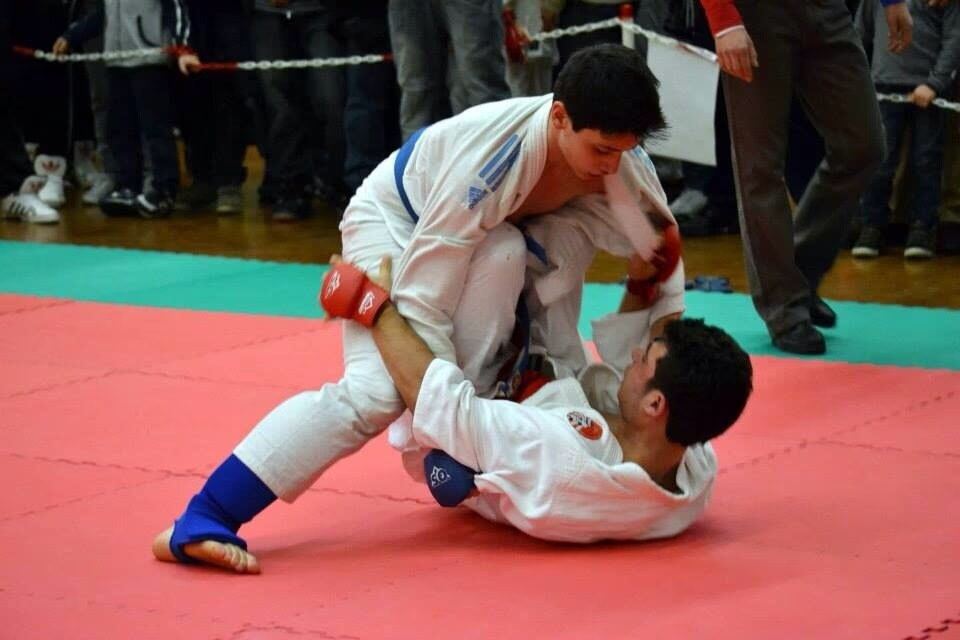
Pin (15 seconds): 5 points; Submission via tap = total victory (ippon); Joint locks on arms + chokes legal at Senior level; restricted in Junior
Continuous flow: referee directs transitions based on competitor actions; Stalemate in any phase → referee restart in standing
Gi (Kimono): JJIF-approved white gi (Phase 2 + 3); red/blue belt for distinguishing competitors; Hand pads / open-fingered gloves: for Phase 1 striking — lightly padded, similar to amateur boxing; Headgear: mandatory in Junior categories; optional in Senior
JJIF-standard tatami: 8m × 8m competition area + padded safety zone; Mat materials must meet JJIF specifications for both striking-impact + groundwork comfort
Two competitors per match; Weight classes follow JJIF schedule (Men: -56, -62, -69, -77, -85, -94, +94 kg; Women similar consolidation); Age categories: Cadet, Junior, Senior, Veteran
Single 3-minute period (4 minutes for Senior major championship); Match is continuous; the three "phases" describe the techniques permitted at any given moment, not separate timed sub-rounds; Light-contact punches + kicks to permitted target areas
Decision priority: ippon/submission > points > referee decision; Tournament: single-elimination + repechage; Gold/Silver/two Bronze per weight + gender + age
Release immediately upon the tap or verbal submission
When an opponent taps the mat, their body, or the competitor's body — or calls 'maitta' — joint locks and chokes must be released at once, even a fraction of a second before the referee signals. Holding on past the tap is considered a serious breach of the martial arts code and can end careers or cause permanent injury.
Applies equally in both competition and training. Delay is viewed as deliberate harm, not competitive edge.
No trash talk or psychological intimidation on the mat
Verbal taunting, stare-downs designed to intimidate, or any psychological pressure tactics before or during a match are considered contrary to the martial spirit. Unlike combat sports with showmanship traditions, Ju-Jitsu's budo roots make such behavior stigmatizing even when not penalized by referees.
Do not apply joint locks with sudden, wrenching force in training
In the training context that precedes and parallels competition, joint locks are applied with progressive pressure, giving the partner time to tap. Snapping on an armbar or shoulder lock without controlled escalation — especially against a less experienced partner — is a serious breach of trust and dojo culture.
Particularly salient in Ju-Jitsu where the fighting system includes submissions that can cause rapid joint damage.
Ready to dive deeper?