


🏛️Official — NASCAR
Loading OpenSourceSports…
The Retaliation Code — 'Settle It on the Track'
If a driver intentionally wrecks you, you are entitled to pay them back on track. NASCAR culture has long treated retaliation as legitimate self-policing. NASCAR chairman Brian France's 'have at it boys' stance (c. 2010–2012) was a public acknowledgment of this long-standing custom. Drivers who never retaliate risk being seen as easy targets.
Don't Wreck a Title Rival to Win a Championship
Using deliberate contact to eliminate a championship competitor from a race — rather than outrunning them — is widely condemned as a violation of competitive integrity. Aggressive racing is expected; manufacturing a wreck to gain points is not. Drivers who do it carry the stigma for years.
One Defensive Move — No Weaving
A driver defending position may make one blocking move. Chopping back across the track after the attacker adjusts — weaving or making multiple moves down a straightaway — is considered dirty and dangerous. The attacking driver picks a lane; the defender counters once and commits.
Rookies Earn Their Place Before Racing Established Veterans Hard
New Cup Series drivers are expected to show restraint, learn the tracks, and avoid initiating conflicts with established veterans before building credibility. Racing overly aggressively — especially against champions — too early earns a lasting reputation as reckless and makes other drivers less willing to give them racing room.
Don't Deliberately Spin the Leader to Steal a Win
Using the bumper to intentionally spin or loosen the car ahead — specifically to take a win rather than from unavoidable racing contact — is one of the most condemned acts in NASCAR. While aggressive bumping to push a drafting partner or make a move for position is accepted, a deliberate 'dump and drive' to steal a victory is a serious violation of the code.
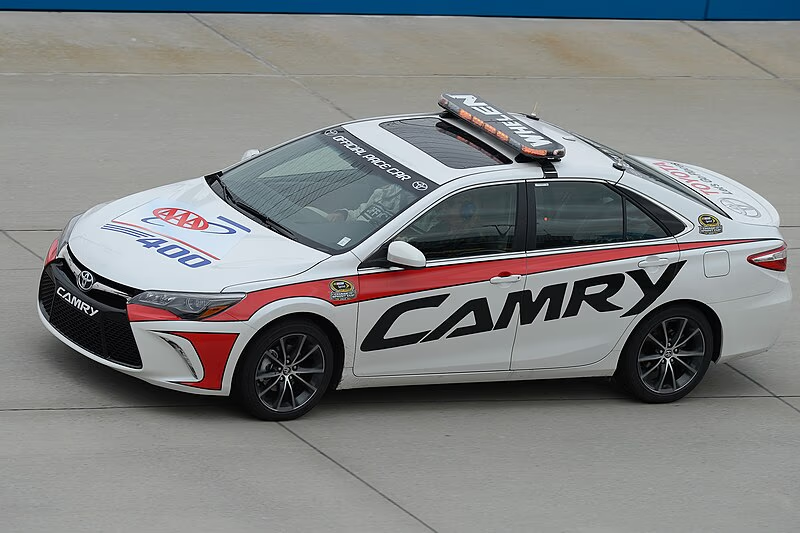
All cars competing in the NASCAR Cup Series must conform to the specifications set forth in the NASCAR Rule Book and the applicable NASCAR-approved templates. The current approved manufacturers for the Cup Series are Chevrolet (Camaro ZL1), Ford (Mustang Dark Horse), and Toyota (Camry XSE).
Why people argue about this
People often assume that NASCAR cars can be any make of car as long as they're fast, which is why they argue about the official specifications set by NASCAR. The confusion arises because the league clearly defines what constitutes a 'legal' Cup Series car through manufacturer templates and body specifications, not just speed or design appeal.
The Next Gen car uses a common steel space-frame chassis supplied by NASCAR-approved manufacturers. The chassis must be constructed per the dimensional specifications in the NASCAR Rule Book.
Why people argue about this
People often assume that a car's weight is solely about its performance, so they argue that lowering the car's weight by removing parts isn't as simple as it sounds; actually, it requires precise calculations to ensure safety and compliance with structural integrity standards outlined in 2.2 Chassis and Structure.
NASCAR Cup Series cars use a naturally aspirated, pushrod V8 engine with a maximum displacement of 358 cubic inches (5.87 liters).
Why people argue about this
People often assume that the weight limit is solely about safety, forgetting that it's also crucial for maintaining a competitive racing environment where every gram counts in aerodynamics and handling. The confusion arises because they overlook how critical this rule is to keeping the field balanced and fair among all teams.
The minimum weight for a NASCAR Cup Series car, including the driver but without fuel, is 3,400 pounds (1,542 kg). Cars found below minimum weight following an event may be subject to disqualification.
Why people argue about this
People often assume that weight requirements are just about adding up all parts of the car for a total weight, forgetting that the driver's body is part of the equation too. But actually, the rule specifies including the driver but excluding fuel from the minimum weight calculation, which can lead to confusion when considering how much weight an average driver adds.
The Next Gen car uses a double-wishbone front suspension and an independent rear suspension (IRS) — a significant change from the previous solid rear axle configuration. Suspension geometry adjustments (camber, toe, caster) are permitted within defined ranges.
Why people argue about this
People often assume that since NASCAR cars now have an independent rear suspension (IRS), they can simply adjust their rear tires like a stock car without worrying about handling changes, but actually, the complex geometry adjustments required for this new setup are crucial to maintaining optimal performance and stability under various racing conditions.
A NASCAR-supplied five-speed sequential (H-pattern sequential) gearbox is mandatory in the Cup Series. Gear ratios are selectable from NASCAR-approved combinations specific to each track.
Why people argue about this
People often assume that NASCAR's transmission rules are about choosing gear ratios for every race, which they don't specify in detail - instead, they're focused on using a mandated gearbox type and allowing teams to select from approved gear ratios based on each track layout. They overlook the fact that these specific gear ratios are set by NASCAR and not decided at the racetrack itself.
The official fuel of the NASCAR Cup Series is Sunoco Green E15, an unleaded fuel containing 15% ethanol, supplied exclusively by Sunoco as the official fuel supplier. No other fuel may be used.
Why people argue about this
People often assume that NASCAR can use any fuel they want as long as it's unleaded, which is why they argue about this rule. Actually, the official verdict clearly states that only Sunoco Green E15, supplied exclusively by Sunoco, is allowed, leaving no room for interpretation or argument regarding what constitutes "the official fuel.
Goodyear Eagle tires are the exclusive tire supplier for the NASCAR Cup Series. Tire compounds are selected by Goodyear and NASCAR specific to each track and event.
Why people argue about this
People often assume that NASCAR can change tire suppliers at will for different tracks and events, which they believe is a flexible option. However, the official verdict clarifies that Goodyear Eagle tires are exclusively used by specifying "exclusive" in their agreement with NASCAR, leaving no room for substitution or change.
The Next Gen car uses an 18-inch aluminum center-lock wheel (single-lug nut, 10-lug pattern on the hub) supplied by NASCAR-approved manufacturers. Wheel diameter is standardized at 18 inches.
Why people argue about this
People often assume that NASCAR mandates exactly which aluminum wheel manufacturers can supply their Next Gen cars, when in fact, it simply specifies the size at 18 inches and uses "approved" as a catch-all term for various suppliers.
NASCAR Cup Series events are held on a variety of track configurations, classified as follows: Superspeedways: Tracks of 2.0 miles or greater in length. Currently includes Daytona International Speedway (2.5 miles / 4.023 km) and Talladega Superspeedway (2.66 miles / 4.281 km). These tracks requi...
Why people argue about this
People often assume that the Track Classification rule in NASCAR only applies to car manufacturers choosing their own tracks, forgetting that it also includes how teams are classified based on track characteristics like banking and length, leading to debates about which team should be favored for a particular race venue.
Pit road is a designated lane adjacent to the racing surface where teams service cars during competition. Each team is assigned a pit stall, the location of which is determined by qualifying position (fastest qualifier receives first choice of pit stall position, continuing in order).
Why people argue about this
People often assume that all pit stalls are equally accessible from the racing surface, thinking they're just lanes on the side of the track. But actually, each team is assigned a specific pit stall based on their qualifying position, creating a hierarchy and leading to debates about fairness and strategy.
The start/finish line is the official scoring reference for lap completion, race start, and race finish. Inductive scoring loops embedded in the racing surface transmit transponder data to NASCAR's scoring and timing system.
Why people argue about this
People often assume that the inductive scoring loops are just for timing purposes and don't affect scoring directly, which leads to misunderstandings about their importance in determining lap completion and race results. The confusion arises because they see these loops as merely timing devices rather than integral parts of how race outcomes are officially recorded.
Designated restart zones are marked on the track, typically by painted lines or cones. For double-file restarts, the leader controls the restart and may accelerate anywhere in the designated restart zone.
Why people argue about this
People often assume that the leader can only accelerate within a designated restart zone if it's for a single-file restart, which leads to arguments when they see leaders accelerating in double-file situations as well. The confusion arises because the official rule specifically mentions double-file restarts but doesn't clarify how this applies to all types of restart scenarios.
The apron is the lower portion of an oval track below the racing surface. On most ovals, the apron is delineated by a painted line (the "commitment line" in certain contexts).
Why people argue about this
People often assume that the apron is just a painted line marking the edge of the track, thinking it's only there for aesthetic purposes. However, they misunderstand that the apron actually serves as crucial guidance for drivers to know where they can safely commit to turning and braking, acting like an invisible boundary beneath the racing surface.
All participants in NASCAR-sanctioned events must hold a valid NASCAR License appropriate to their role. License categories include Driver, Crew Chief, Car Owner, Crew Member (Over-the-Wall), Crew Member (Non-Over-the-Wall), Spotter, and Official.
Why people argue about this
People think that only drivers need a NASCAR license, so they overlook other roles like crew chiefs and owners who also require licenses. But actually, every participant in sanctioned events must hold a valid license appropriate to their role as per Rule 4.1.
Only one driver per car is permitted per event. The driver listed on the entry form is the only person authorized to operate the car in competition.
Why people argue about this
People often assume that if a car is entered with multiple names, all of them can race in it during an event, which leads to arguments when only one driver per car is allowed as stated by the rule. The confusion arises because NASCAR rules specifically limit each car to one active driver per race, yet some think they have more flexibility based on who's listed on the entry form.
The Crew Chief is responsible for all competition decisions made by the team, including car setup, strategy, and the conduct of crew members. The Crew Chief is the primary point of contact between the team and NASCAR officials.
Why people argue about this
People often assume that the Crew Chief's role is solely about making race strategy decisions, but they overlook their full responsibility which includes overseeing car setup and ensuring all crew members conduct themselves in accordance with NASCAR rules and regulations. This oversight aspect can lead to confusion because it implies a broader authority than just strategic planning.
During pit stops, a maximum of five (5) crew members are permitted over the pit wall to service the car. These five positions are: front tire changer, front tire carrier, rear tire changer, rear tire carrier, and jackman.
Why people argue about this
People often think that only one crew member can be over the wall during pit stops, mistakenly believing it's a per-person limit rather than a total count of five allowed at once. But actually, this rule allows for up to five different crew members in those specific roles simultaneously, not just one person performing all tasks.
Each car must have a licensed Spotter positioned in the designated spotter stand at the track. The Spotter communicates with the driver via two-way radio throughout the event, providing information about track conditions, cautions, and the positions of other cars.
Why people argue about this
People often assume that only one spotter is needed per car, thinking it's a simple count of how many spots are available at the track. But in reality, the rule specifies each car must have its own licensed Spotter positioned in the designated stand, regardless of how many cars there are on the track, leading to misunderstandings about needing multiple spotters for different drivers.
NASCAR Race Control, located in a control tower or designated area at the track, is responsible for the conduct of the event.
Why people argue about this
People often assume that NASCAR Race Control only oversees safety issues and traffic management from afar, which leads them to think they're just a passive observer. However, the actual role of NASCAR Race Control is far more active - they make critical decisions about race strategy, penalize infractions, and manage pit stops, all while being right there in the action zone at the track.
The car owner listed on the NASCAR entry form is ultimately responsible for the car's compliance with the Rule Book at all times. Car owners must maintain their NASCAR License in good standing and ensure all team members operating under their entry are properly licensed.
Why people argue about this
People often assume that just listing a car owner on the entry form absolves them of all responsibility, but in reality, they're expected to ensure compliance with NASCAR rules at all times and maintain proper licenses for their team members, not just themselves.
Teams must submit an official entry form by the NASCAR-established deadline for each event. The field for Cup Series events is 40 cars.
Why people argue about this
People often argue that they didn't submit their entry form in time, despite checking the deadline multiple times, leading them to believe it's a matter of timing rather than understanding the clear rule stating only 40 cars are fielded for Cup Series events, regardless of when entries were submitted.
Events begin with pace laps under the pace car, during which drivers warm up tires and receive final instructions. The field takes the green flag when NASCAR Race Control deems conditions safe.
Why people argue about this
People often assume that drivers start their engines as soon as they see the green flag, forgetting about the mandatory pace laps under the pace car where tires are warmed up. The confusion arises because NASCAR emphasizes safety over speed, ensuring all cars have optimal tire conditions before green lights go off.
Introduced for the 2017 season, NASCAR Cup Series races are divided into three stages. The first two stages end at pre-determined lap counts (published in the event entry information for each race), followed by the final stage which ends at the scheduled race distance.
Why people argue about this
People often assume that each stage in NASCAR races is a separate race itself, which leads them to believe they need to strategize entirely new pit stops and strategies for every 30-50 lap segment. But actually, these stages are just defined segments of the overall race distance, allowing teams to maintain their strategy across multiple laps.
NASCAR Race Control may display the yellow flag (caution) at any time due to an on-track incident, debris, inclement weather, or other hazardous conditions.
Why people argue about this
People often assume that all cars line up in a single file behind the lead-lap cars during double-file restarts, but actually, lead-lap cars are supposed to be lined up in running order from inside out while lapped cars sit outside them in their own lane. This can lead to misunderstandings about which cars should be where and how they should line up.
Restarts following caution periods use a double-file restart format. Lead-lap cars line up in the inside lane in running order; lapped cars line up in the outside lane behind the lead-lap cars.
Why people argue about this
People often assume that in a double-file restart, all cars must stay in their original positions from before the caution period, but actually, they're supposed to switch lanes based on whether they were leading or lapped at the time of the caution — lead-lap cars move to the inside lane and lapped cars to the outside.
If a caution is displayed within the final two laps of a stage or the final two laps of the race, NASCAR will attempt to complete the event under green-flag conditions using the Green-White-Checkered (GWC) overtime procedure. A maximum of three (3) overtime attempts are permitted.
Why people argue about this
People think that if a caution is displayed in the final two laps of a race, it's automatically over and they have to use overtime, but actually, the rule only kicks in if there are still at least 20 seconds left on the clock when a caution comes out, ensuring some racing time remains before deciding on overtime.
Cars must enter and exit pit road in the designated entry and exit lanes. The following rules apply on pit road: Cars must maintain pit road speed from entry to exit cone/marker.; Cars must stop within their assigned pit stall boundaries.; No more than five crew members may be over the pit wall a...
Why people argue about this
People often assume that all cars receive a checkered flag as they cross the finish line, thinking it's automatic for finishing the race distance. However, the official rule clarifies that only the race leader gets the checkered flag upon completing the scheduled distance; other cars get theirs when they cross the line themselves, regardless of whether they've finished or not.
The checkered flag is displayed at the start/finish line as the race leader crosses to complete the scheduled race distance (or the final overtime lap). All other cars receive the checkered flag as they cross the line.
Why people argue about this
People often assume that all cars receive a checkered flag as they cross the line, thinking it's like in auto races where everyone gets green lights at the finish. But actually, only the race leader gets the checkered flag to signify completion of the distance; other cars get theirs when they cross the line individually, even if not finishing first.
NASCAR Race Control may suspend a race at any time due to inclement weather, track conditions, or other safety concerns. A race is considered official after the completion of 50% of the scheduled race distance under green-flag conditions.
Why people argue about this
People often assume that if a race is suspended due to weather before 50% of the distance has been completed under green flags, it's automatically called off entirely. But actually, as long as at least half the scheduled distance was run under clear conditions (green flag), NASCAR considers the race official regardless of what happens later in poor weather.
NASCAR Cup Series points are awarded to all cars that attempt to start each points-paying event. The points structure is as follows: 1st place: 40 points; 2nd place: 35 points; 3rd place: 34 points
Why people argue about this
People often think that only winning cars earn points under NASCAR's regular season rules, which leads them to miss out on understanding that all cars attempting to start an event get race points, regardless of finishing position. The confusion arises because they interpret "points-paying events" as exclusively referring to the eventual winner and maybe a few others in contention for victory.
At the conclusion of each of the first two stages of a race, championship points are awarded to the top 10 finishers of that stage: Stage winner (1st): 10 points; 2nd: 9 points; 3rd: 8 points
Why people argue about this
People often assume that stage points are only awarded at the end of each race, forgetting about the first two stages where they're actually given out. This oversight leads to confusion because it's a crucial detail for strategizing and understanding how championship points accumulate throughout the race.
Playoff points are a separate currency used to determine seeding within the NASCAR Cup Series Playoffs.
Why people argue about this
People often assume that Playoff Points are just like regular race points, thinking they're interchangeable. But in reality, these are a distinct system used solely for playoff seeding, completely separate from how drivers earn championship points throughout the season.
The NASCAR Cup Series Playoffs begin following the conclusion of the 26-race regular season and consist of 10 races across four rounds: Round of 16 (3 races): Darlington Raceway, Bristol Motor Speedway, Kansas Speedway; Round of 12 (3 races): Talladega Superspeedway, Charlotte Motor Speedway Rova...
Why people argue about this
People often assume that winning a regular season race is enough to qualify for the Playoffs, but they misunderstand that you must also be in one of the top 30 driver points standings at the end of the regular season. The confusion arises because qualifying involves both a win and strong overall performance throughout the year.
In addition to driver points, Owner Points and Manufacturer Points are tracked throughout the season. Owner Points follow the same structure as driver points and are used to determine charter eligibility and other owner-based awards.
Why people argue about this
People often think that Owner Points are just for show or don't matter much since they're only used for charter eligibility, but actually, these points can significantly impact a team's overall standing and influence which cars they get to race in certain races, leading to intense debates about strategy and who deserves credit.
Cars are subject to inspection before and after each event. Technical violations are classified by severity: P1 (Minor Violation): Typically a small monetary fine and/or loss of practice/qualifying time. Examples include minor body tolerances exceeded, improper signage, or minor equipment infract...
Why people argue about this
People often assume that car inspections in NASCAR are only conducted before an event starts, thinking it's a one-time check rather than ongoing throughout the race weekend. The confusion arises because the official verdict explicitly states they're checked both before and after each event, not just at the beginning of the day.
NASCAR Race Control may assess on-track penalties during a race event, including: Drive-Through Penalty: The car must enter pit road at pit road speed and drive through its pit stall without stopping. Common for pit road speeding, too many crew members over the wall, and improper tire disposal.; ...
Why people argue about this
People think that jumping a restart only means you get a drive-through penalty, but they misunderstand that NASCAR can also require you to start at the very back of the field if it deems your action significantly impacted the restart's fairness and order. They overlook the option for an additional penalty beyond just the drive-through.
Common pit road violations and their standard penalties include: Pit road speed violation: Drive-through penalty for the first offense. Repeat violations in the same event may result in a stop-and-go or further penalty.; Too many crew members over the wall (more than 5): Drive-through penalty.; U...
Why people argue about this
People often think that jumping a restart only results in a drive-through penalty, forgetting that NASCAR can also require them to start at the back of the field if they believe it significantly affected the race's flow. This oversight stems from not fully grasping the discretion given to NASCAR officials when enforcing this rule.
Jumping a restart (accelerating before the restart zone) results in a drive-through penalty. The car may also be required to restart at the tail of the field in addition to the drive-through, at NASCAR's discretion, if the violation is deemed to have materially affected the restart.
Why people argue about this
People often assume that jumping a restart is just about speeding up before the signal to go again, but they misunderstand that it's actually more about disrupting the flow of the race by creating an unfair advantage over slower cars, which is why NASCAR can also require the offending car to start at the back if deemed necessary.
Teams wishing to appeal a NASCAR penalty must submit a written notice of appeal to NASCAR within the timeframe specified in the Rule Book (typically within 48 hours of the penalty announcement for post-event penalties). Appeals are heard by the NA...
Why people argue about this
People often think that they have unlimited time to appeal a penalty after it's announced, but in reality, the official timeframe is typically just 48 hours as specified in the Rule Book for post-event penalties in NASCAR. They mistakenly believe there are no deadlines or specific windows within which to file an appeal.
NASCAR maintains a strict Substance Abuse Policy applicable to all licensed participants. Testing may be conducted at any NASCAR-sanctioned event or facility.
Why people argue about this
People often think that only drivers are covered by NASCAR's Substance Abuse Policy, forgetting about crew chiefs and other support staff who also need to adhere to it. The confusion arises because the policy explicitly states it applies to "all licensed participants," not just those directly in the cockpit or on track.
All NASCAR Cup Series drivers must wear the following safety equipment during competition and on-track activity: Helmet: A full-face helmet meeting the current Snell SA or SFI 31.1A/2020 (or higher) standard is mandatory. Open-face helmets are not permitted. Helmet certification labels must be vi...
Why people argue about this
People often assume that only the driver's helmet is inspected for safety, overlooking other crucial pieces like gloves and shoes. But in reality, NASCAR requires all mandatory safety equipment—helmets, HANS devices, fire suits, gloves, and shoes—to be certified by their tech guys to ensure a comprehensive level of protection.
The Next Gen car incorporates several mandatory safety systems: Roll Cage: A multi-point chromoly steel roll cage is mandatory, conforming to NASCAR's structural specifications. The roll cage includes a primary hoop, front hoop, roof halo bar, door bars (minimum six per side), and rocker panel pr...
Why people argue about this
People often assume that only the driver's helmet is inspected for safety, forgetting about other crucial protective gear like gloves and shoes. But in reality, NASCAR Technical Officials check all equipment including gloves and shoes to ensure they meet current certification standards and are not damaged, prioritizing a comprehensive safety review across the board.
NASCAR works with track operators to ensure safety infrastructure meets required standards: SAFER Barriers (Steel and Foam Energy Reduction): SAFER barriers (also known as "soft walls") are required along the perimeter walls of all NASCAR Cup Series tracks. These barriers consist of steel tubing ...
Why people argue about this
People often assume that only new equipment needs inspection, forgetting that even if a driver has had their gear for years, it still must meet current NASCAR certification standards at every race. The confusion arises because they overlook the ongoing requirement of regular inspections regardless of when the gear was originally certified.
NASCAR Race Control will immediately display the yellow caution flag or the red flag in response to any on-track incident presenting a safety hazard. The red flag requires all cars to immediately r...
Why people argue about this
People often assume that only the driver's helmet is inspected under safety equipment rules, which leads them to overlook other crucial items like gloves and shoes. The confusion arises because NASCAR explicitly states all safety gear must be certified by officials, not just the helmet worn on top of everything else.
All safety equipment worn by the driver (helmet, HANS device, fire suit, gloves, shoes) is subject to inspection by NASCAR Technical Officials. Equipment that does not meet current NASCAR certification standards or that is found to be in a damaged...
Why people argue about this
People often assume that only the driver's helmet needs inspection for safety, ignoring other crucial pieces like gloves and shoes. However, the rule actually extends to all protective gear including these items, which can lead to arguments about what exactly constitutes "safety equipment.
Following any significant on-track incident, NASCAR Safety Team personnel respond immediately. The driver may not exit the car until cleared by the Safety Team unless there is an immediate life-threatening hazard such as fire.
Why people argue about this
People often assume that if a car is involved in an incident, the driver must stay inside until all incidents are cleared, regardless of their own safety or health needs. However, the actual rule allows drivers to exit if there's an immediate life-threatening hazard like fire, not just because they're stuck in a crashed vehicle.
All cars competing in the NASCAR Cup Series must conform to the specifications set forth in the NASCAR Rule Book and the applicable NASCAR-approved templates. The current approved manufacturers for the Cup Series are Chevrolet (Camaro ZL1), Ford (Mustang Dark Horse), and Toyota (Camry XSE).
Why people argue about this
People often argue that they can use their own custom-built engines as long as they meet performance criteria, misunderstanding that while engine specs are flexible for competition, the chassis manufacturers—Chevrolet, Ford, and Toyota—are strictly regulated by NASCAR templates, not allowing individual car builders to design their own chassis.
NASCAR Cup Series events are held on a variety of track configurations, classified as follows: Superspeedways: Tracks of 2.0 miles or greater in length. Currently includes Daytona International Speedway (2.5 miles / 4.023 km) and Talladega Superspeedway (2.66 miles / 4.281 km). These tracks requi...
Why people argue about this
People often assume that NASCAR tracks are all meticulously designed ovals, so they're surprised when they hear about road courses in the rules. Actually, the "Playing Area" section covers a broader spectrum of track configurations, including oval and road course layouts, which can lead to misunderstandings if someone only thinks of traditional oval tracks.
All participants in NASCAR-sanctioned events must hold a valid NASCAR License appropriate to their role. License categories include Driver, Crew Chief, Car Owner, Crew Member (Over-the-Wall), Crew Member (Non-Over-the-Wall), Spotter, and Official.
Why people argue about this
People think that only drivers need a NASCAR license, so they argue why other roles like crew chiefs or owners don't require one. But actually, every participant in sanctioned events must hold an appropriate license based on their role as per Section 4, which includes categories for Driver, Crew Chief, Car Owner, and more.
Teams must submit an official entry form by the NASCAR-established deadline for each event. The field for Cup Series events is 40 cars.
Why people argue about this
People often assume that if 40 cars are in the field for a Cup Series event, then teams can simply submit their entry forms at any time before the race date, which leads to confusion about when exactly they need to be submitted by NASCAR’s deadline. Actually, the rule specifies an exact submission period tied to the event's date, creating uncertainty and debate among teams.
NASCAR Cup Series points are awarded to all cars that attempt to start each points-paying event. The points structure is as follows: 1st place: 40 points; 2nd place: 35 points; 3rd place: 34 points
Why people argue about this
People often assume that only cars finishing a race earn points, which leads them to misunderstand that scoring is based on participation rather than just winning. The actual rule states that points are awarded to all cars that attempt to start each event, meaning even if they're disqualified or crash out before the finish line, they still get credit for showing up and competing.
NASCAR has sole and exclusive authority to assess penalties for violations of the NASCAR Rule Book, NASCAR Bulletins, and any NASCAR-issued directives. Penalties may be assessed before, during, or after a NASCAR-sanctioned event.
Why people argue about this
People often assume that NASCAR can only impose penalties after an event has concluded, which is why they argue that penalties are assessed before, during, or even outside of sanctioned events. Actually, the confusion arises because this rule grants NASCAR immediate authority to penalize infractions at any point in time, not just post-race.
All NASCAR Cup Series drivers must wear the following safety equipment during competition and on-track activity: Helmet: A full-face helmet meeting the current Snell SA or SFI 31.1A/2020 (or higher) standard is mandatory. Open-face helmets are not permitted. Helmet certification labels must be vi...
Why people argue about this
People often assume that only the driver's helmet is inspected for safety, overlooking other crucial pieces like gloves and shoes. The misconception stems from NASCAR emphasizing helmets in their public safety campaigns, leading many to believe inspections are limited to head protection alone.