


🏛️Official — Estado de Mexico Commission
Loading OpenSourceSports…
La máscara es sagrada — never remove a mask outside an apuesta
A luchador's mask represents identity, lineage, and career. Pulling at, exposing, or removing an opponent's mask during any non-apuesta (bet) match is the gravest violation in lucha libre. Even an accidental unmasking requires immediate restoration. The mask is treated as a second face — forced removal without a formal wager is profoundly dishonorable.
Do not go into business for yourself — honor the planned finish
Deviating from the agreed-upon match result without promoter consent is universally condemned. Lucha libre's cooperative art depends on mutual trust. A luchador who unilaterally changes a finish can be permanently blacklisted from major promotions. The norm is enforced especially strictly within CMLL's traditional structure.
A mask wager must be earned — do not challenge frivolously
An apuesta match staking a luchador's mask is a career-defining event requiring genuine feud, heat, and storytelling buildup. Challenging for a mask without credible rivalry, or accepting a mask match without sufficient story, disrespects the tradition and the cultural weight of what a mask represents. The stakes must feel real.
Respect the veteran hierarchy — younger luchadores defer to elders
CMLL and the Estado de Mexico Commission operate on a strict generational hierarchy. Younger wrestlers defer to veterans in locker room order, travel arrangements, and early-career positioning. Publicly upstaging or disrespecting a recognized legend without being granted that standing through earned seniority is a serious social offense.
Protect your opponent — cooperation is the foundation of the art
Because lucha libre is a cooperative performance, failing to protect a partner from real injury — especially during high-risk aerial maneuvers — is a serious breach of trust. Careless work resulting in preventable injury can get a luchador shunned by promoters and peers. Receiving a dive requires correct positioning; this duty falls on both performers.
Accept mask or hair loss with dignity — weeping is honorable
The loser of an apuesta match must accept the outcome publicly. Uniquely in lucha culture, weeping after losing your mask is not weakness — it is expected and respected as proof of the mask's meaning. Refusing the result or leaving the arena immediately is heavily stigmatized. The reveal is a solemn ceremony, not merely a match finish.
Best 2-of-3 falls (Lucha Libre standard, vs WWE-style single-fall format); "Fall" = pinning shoulders for 3 count, submission, count-out, or DQ; Match length: 10-25 minutes typical; title matches longer
Why people argue about this
People often assume that in a standard Lucha Libre match format, each wrestler gets three separate falls before deciding who wins, which leads to matches lasting 30 minutes or more. However, the actual rule is that best two out of three falls decide the winner, with matches typically capped at around 25-30 minutes, divided into ten-minute halves.
Singles: 1 vs 1, standard 2-of-3 falls; Tag (parejas): 2 vs 2; Trios (the Lucha Libre signature): 3 vs 3, captain selected per team
Why people argue about this
People often assume that in Lucha Libre singles matches are always one-on-one, forgetting that the term "singles" can be misleadingly used for matches involving multiple characters working together under a single mask or gimmick, which they still consider as a single match type. The confusion arises because of how these complex setups are perceived and labeled by fans and commentators alike.
Aerial moves (vuelos): high-flying dives, suicide dives outside the ring, top-rope maneuvers — central to Lucha style; Submissions (llaves): joint locks (armbar, kneebar) + chokes — Lucha-tradition holds derived from catch wrestling; Striking: chops, forearms, kicks; closed-fist punches less comm...
Why people argue about this
People often assume that aerial moves are strictly prohibited in Lucha Libre matches, which leads to misunderstandings about their legality. However, the official verdict clarifies that these high-flying maneuvers are indeed permitted as a key part of the style and are integral to what makes Lucha Libre so unique and exciting.
Mask (máscara): central identity element; many luchadores wear masks throughout career — losing a mask in a luchas de apuestas (bet match) is a major career event; Tights/boots: traditional luchador attire — colorful tights, knee-high boots, ornamental cape (for entrance only); Hair: for unmasked...
Why people argue about this
People often assume that the use of athletic tape is purely cosmetic in Lucha Libre matches, believing it's just for looks. However, they overlook the fact that the tape actually serves a functional purpose by providing support and reducing friction at joints during high-intensity maneuvers, thus preventing injuries.
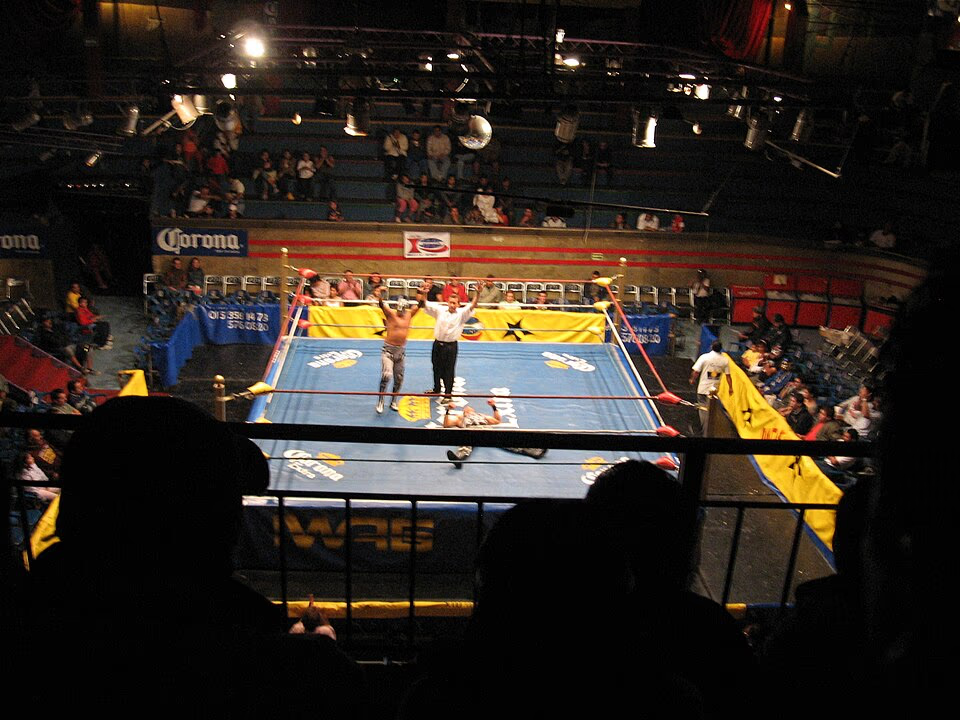
Square ring: ~6 m × 6 m elevated padded ring with 4 roped sides + turnbuckles at corners; Padded canvas + foam ring floor over wooden boards; Outside-ring area: padded floor surrounding ring perimeter for outside-ring action
Why people argue about this
People often assume that the size of the ring in Lucha Libre is fixed at exactly 6 meters by 6 meters, but actually, it can vary slightly depending on the commission's regulations, leading to misunderstandings about exact dimensions and potential arguments over space efficiency or aesthetics.
Single match: 1-on-1 (singles), 2-on-2 (parejas/tag), 3-on-3 (trios — the Lucha Libre signature format), or larger battle royals; Roles: técnico (face/hero), rudo (heel/villain), tweener (in-between); Officials: 1 referee (árbitro) inside ring + 1 senior official (júdice supreme) ringside + rings...
Why people argue about this
People often assume that all Lucha Libre matches must be in a trio format, forgetting about the other match types like singles or battle royals. However, the official verdict clarifies that these different formats are indeed part of the sport's spectrum and can coexist with trios, which is not always understood by newcomers to the scene.
Best 2-of-3 falls (Lucha Libre standard, vs WWE-style single-fall format); "Fall" = pinning shoulders for 3 count, submission, count-out, or DQ; Match length: 10-25 minutes typical; title matches longer
Why people argue about this
People often assume that Lucha Libre matches are best out of three falls played continuously without breaks, which leads to misunderstandings since they're actually decided by winning two separate 15-minute halves with a break in between. The confusion arises because this format is not immediately obvious from the name or initial description of the sport.
Best 2-of-3 falls; first to 2 falls wins the match; Falls counted by referee 3-count, submission tap, count-out, DQ, or referee stoppage; Title belts: held by individual luchador; defended periodically; lineage tracked across decades
Why people argue about this
People often assume that scoring in Lucha Libre is solely based on falls and disqualifications, forgetting about the crucial role of judges' scores for titles. The confusion arises because they overlook how individual luchadores can win championships through judges' decisions rather than physical contact or submission.
Removing opponent's mask in-match: instant DQ (one of Lucha Libre's most sacred rules — only special máscara contra máscara matches can strip masks); Hitting referee: DQ + suspension; Outside interference: DQ for the benefiting wrestler
Why people argue about this
People often assume that removing an opponent's mask in Lucha Libre matches is just a playful move for show, thinking it won't result in disqualification. However, they misunderstand that Section 7 clearly states this action results in immediate disqualification (DQ), overriding all other rules and making the match over immediately.
Lucha Libre is choreographed-but-physical — luchadores perform acrobatic moves that produce real-injury risk: fractures, concussions, neck/back injuries from dives + slams. State commission requires: pre-match medical inspection of each luchador (...
Why people argue about this
People often assume that the pre-match medical inspections are solely for the luchador's own safety, when in reality, they're also meant to ensure their opponents' health and prevent unnecessary injuries during matches, which can lead to conflicts over perceived lack of thoroughness or cost implications.