


🏛️Official — NCAA
Loading OpenSourceSports…
Individual Sports
1 players
indoor
firearm, target, jacket
10 essential rules
NCAA Rifle is one of only two NCAA-sanctioned co-educational team sports (the other is Fencing). Contested in the winter semester at NCAA Division I, II, and III institutions; ~30 NCAA D1 programs as of 2026. NCAA Rifle uses the USA Shooting + ISSF (International Shooting Sport Federation) techni...
Pre-event equipment inspection at championship: rifle weight, jacket fit, boot height, glove specs all checked per ISSF Equipment Standards.
Smallbore 3-position (3P): 60-shot match — 20 prone, 20 standing, 20 kneeling; Air rifle: 60-shot standing match; NCAA Aggregate: smallbore + air rifle scores combined for team championship
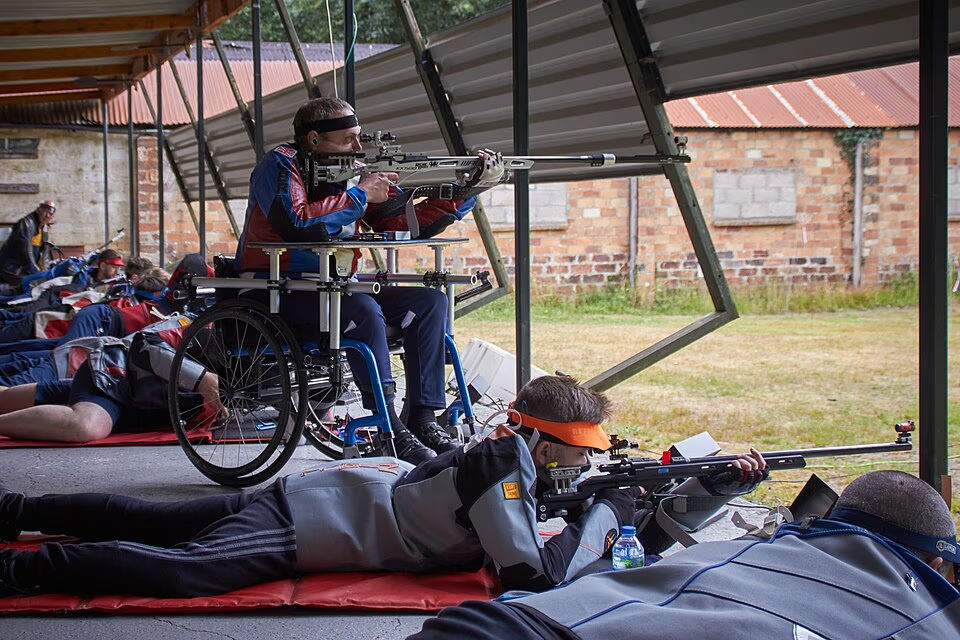
Prone: lying on ground, rifle supported by elbows + sling; Standing: upright, no support beyond the body; Kneeling: kneeling on right knee, sitting on right heel, support via the left elbow on left knee
Rifle: per ISSF spec for the discipline (smallbore .22 LR or air rifle 4.5 mm); Smallbore: .22 LR rifle, max weight 8 kg, single-shot bolt action; iron sights or scope per ISSF; Air rifle: 4.5 mm pellet, max weight 5.5 kg, max muzzle velocity 200 m/s
Indoor shooting range with multiple firing positions (typically 8-20 lanes); Smallbore: 50 ft (NCAA spec) firing distance with 50-ft target; Air rifle: 10 m firing distance with 10-m target
NCAA team: 5 shooters per team in each event; top 4 scores count for team total (drop the lowest); Roster: typically 6-12 athletes for NCAA D1; co-ed competition; Officials: chief range officer, range officer, target judges, scorer, equipment inspector
Pre-event equipment inspection at championship: rifle weight, jacket fit, boot height, glove specs all checked per ISSF Equipment Standards.
Each shot scored 1-10 (10 inner ring center); NCAA scoring: integer scoring (1-10) — different from ISSF's decimal scoring (10.9 max per shot); Match score: sum of 60 shots (max 600)
Equipment violation (oversized jacket, illegal sling, etc.): warning + correction; subsequent = 2-point deduction or DQ per severity; Time violations: shots fired after time = DQ for those shots; Position violations: improper position support = warning; subsequent = score deduction
Range safety is paramount: muzzle discipline (always pointed downrange), action open when not firing, ear/eye protection, no live ammunition outside the firing line. Range safety officer enforces all safety rules; violations cause immediate ejection.
Absolute silence while any shooter on the relay is in their shot sequence
Unnecessary talking, movement, or audible noise while a relay is underway is considered a serious breach. The expectation of near-total quiet among competitors, coaches, and spectators near the line far exceeds what any rulebook mandates and is enforced entirely through social pressure.
Even whispered conversation between teammates during a live relay is widely considered poor form at the collegiate level.
Never handle another shooter's rifle without explicit permission
A competitor's rifle is their most personalized and precisely adjusted piece of equipment. Touching it — even briefly, even helpfully — without asking first is a serious breach of respect universally observed across all levels of competitive shooting.
Applies equally to teammates; asking first is expected even in a team equipment emergency.
Ready to dive deeper?