


🏛️Official — UCI
Loading OpenSourceSports…
Cycling
1 players
outdoor
bicycle, helmet, course
10 essential rules
Mountain Biking is the off-road cycling discipline governed internationally by the Union Cycliste Internationale (UCI), defined in Part 4 of the UCI Cycling Regulations. UCI sanctions multiple race formats: Cross-Country Olympic (XCO) — the Olympic medal discipline since 1996; Cross-Country Marat...
Riders must complete every section under their own power (running with bike permitted); Outside assistance restricted to designated tech zones
Heat-format brackets; top finishers advance through quarterfinals/semis/final
Riders gridded by UCI ranking; mass start with countdown; Riders complete prescribed laps; first across finish line wins; Lapping: lapped riders pulled when caught (XCO)
Bicycle frame: rigid or suspended; minimum wheel diameter 26" (66 cm), max 29" (74 cm); 27.5" and 29" dominant in pro XCO; Hydraulic disc brakes required at UCI level (front + rear); Handlebar width limited to 1000 mm max
XCO: circuit 4-6 km/lap, 4-7 laps, ~80-100 min target winning time; mix of climb/descent/technical features; XCM: point-to-point or large loop, 60-160 km; XCE: short (~1-1.5 km) circuit with technical features; heat-format eliminator
Individual sport; nations may field teams for relay events; UCI categories: Elite Men, Elite Women, U23 Men/Women, Junior Men/Women; Officials: race director, commissaires (line judges, technical, finish), medical staff, course marshals
Riders gridded by UCI ranking; mass start with countdown; Riders complete prescribed laps; first across finish line wins; Lapping: lapped riders pulled when caught (XCO)
Individual races: finishing time + position; UCI World Series: points awarded per round → series standings; series leader's jersey awarded; UCI World Rankings: rolling 12-month aggregate; informs Olympic qualification
Cutting course: time penalty or disqualification; Outside assistance: outside tech zones — disqualification; Mechanical doping (motor): immediate disqualification + suspension + fine
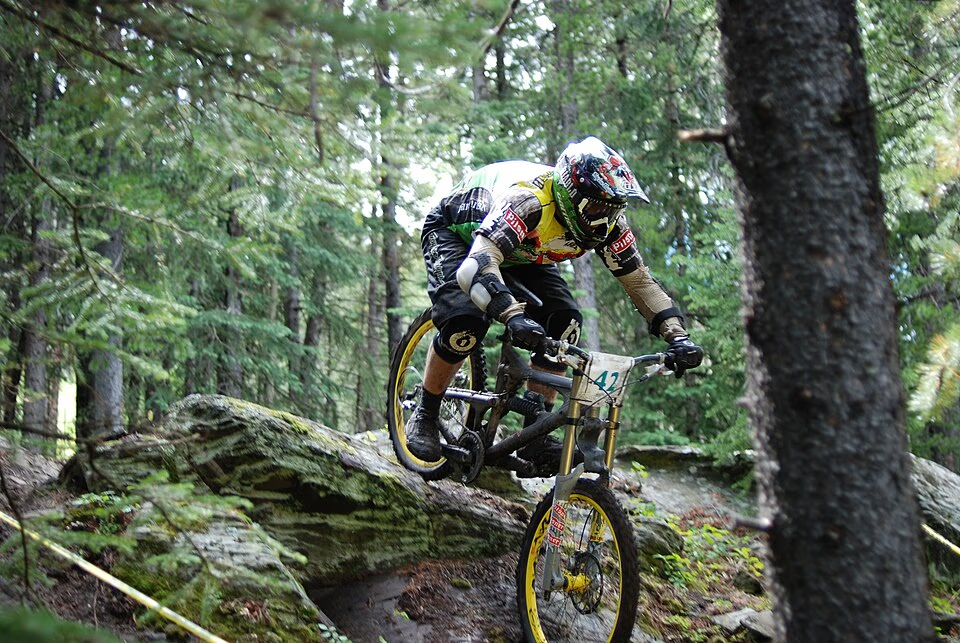
Mandatory CE-certified helmets; full-face helmet + knee/elbow pads required for DHI, 4X, PUT. Course inspection prior to competition; commissaires authorized to neutralize sections in unsafe conditions.
Stop for a seriously injured rider, even mid-race
If a fellow competitor is badly injured and in danger, stopping to render aid is expected — winning at the cost of leaving someone seriously hurt is considered deeply dishonorable. Minor crashes where the rider is visibly okay do not obligate a stop, but life-threatening situations do.
More culturally entrenched in road cycling but firmly present in MTB racing culture, particularly in remote backcountry enduro stages where medical response may be slow.
Never ride wet or saturated trails
Riding trails when they are waterlogged causes severe, lasting rut damage to trail surfaces. The saying 'if in doubt, don't ride it out' is core to MTB culture. Violating this is seen as selfish trail destruction and brings strong disapproval from the local riding community.
Particularly enforced by local trail advocacy groups and IMBA-affiliated clubs who invest hundreds of volunteer hours in trail maintenance.
Never cut switchbacks
Shortcutting switchbacks by riding the fall line between corners causes severe erosion, widens damage to surrounding vegetation, and undermines the trail design. It is considered a mark of poor character and disrespect for the trail builders and the ecosystem.
Don't 'snake' another rider — no dropping in ahead of someone already on a feature or trail section
Dropping into a jump line, tech section, or trail immediately in front of a rider who is already committed and moving is dangerous and disrespectful. At bike parks this applies to queued jump lines; on trails it applies to blind rollins and technical features with no escape.
Particularly prominent in bike park culture where lift-accessed downhill concentrates many riders on the same lines.
In XCO and enduro races, lapped or slower riders yield to race leaders
A rider being overtaken by the race leader or a significantly faster competitor is expected to move aside promptly and not contest the pass. Deliberately impeding a rival or racing hard against the leader when you are out of contention is seen as unsporting and draws criticism from riders and officials alike.
UCI XCO rules address some aspects of this formally, but the unwritten expectation of gracious yielding goes further than the written rule — including in enduro transitions and timed stages.
Yield to horses, then hikers — bikes are lowest priority on shared trails
The accepted multi-use trail hierarchy: horses have absolute right of way (spooking a horse risks serious injury), hikers second, cyclists last. Riders are expected to stop, speak calmly to alert equestrians, and move completely off-trail if needed.
Failure to yield to horses in particular has historically created land-access conflicts that result in trails being closed to bikes entirely.
Ready to dive deeper?